
Last updated October 15, 2026
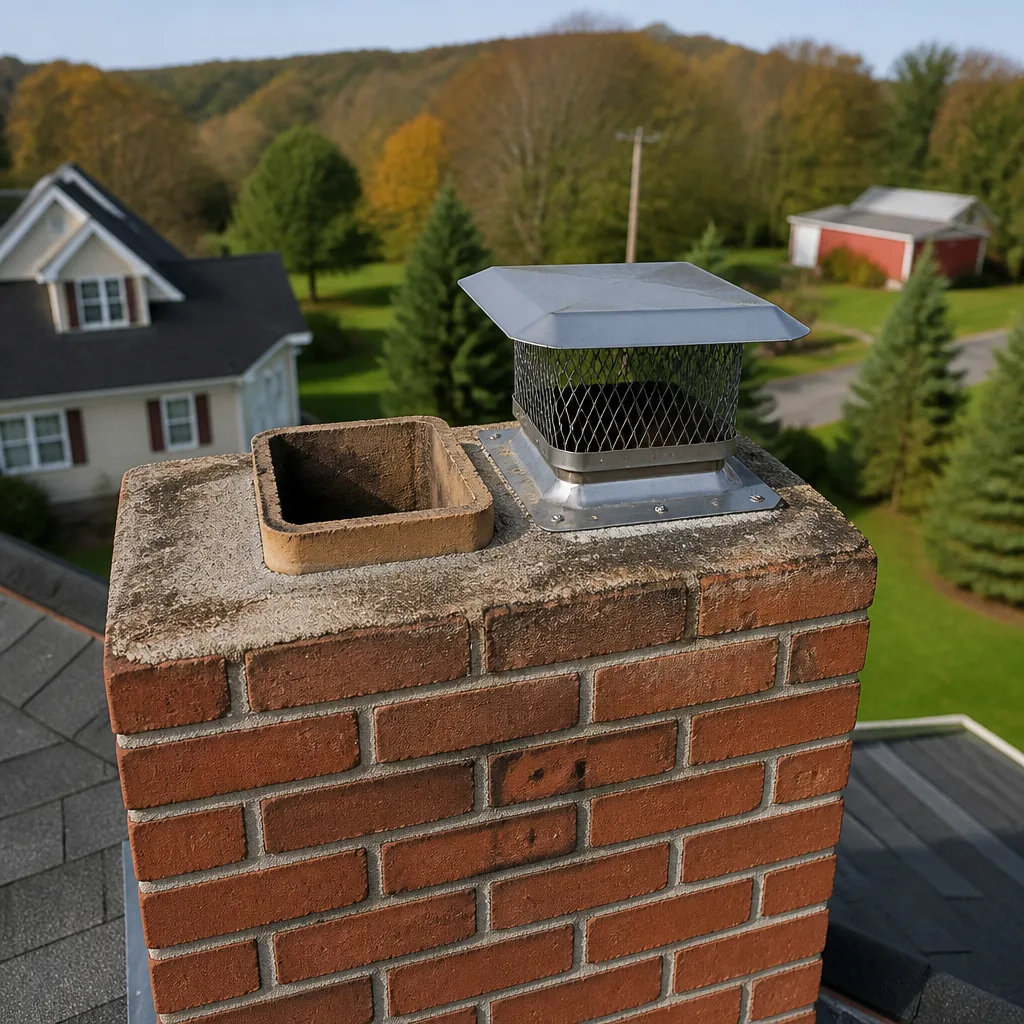 Sweep & inspection
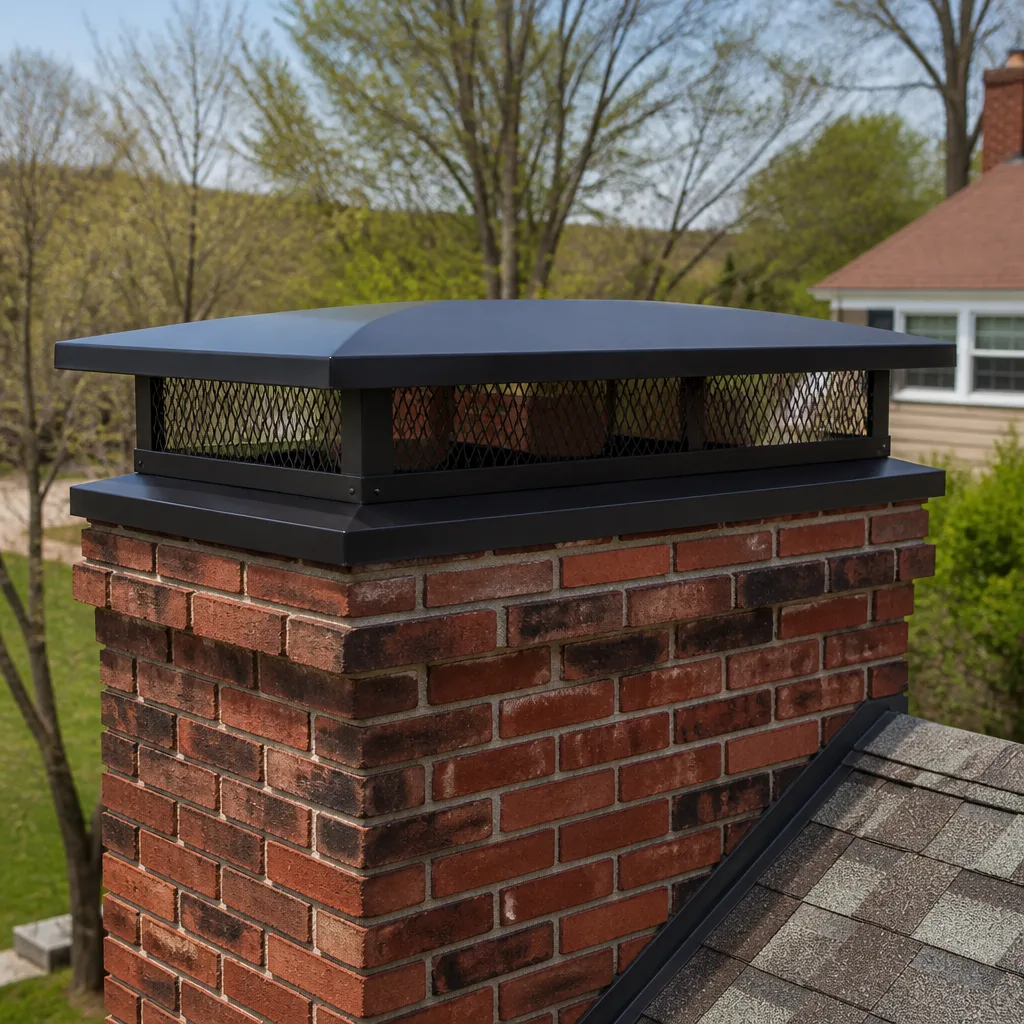 Caps & crowns
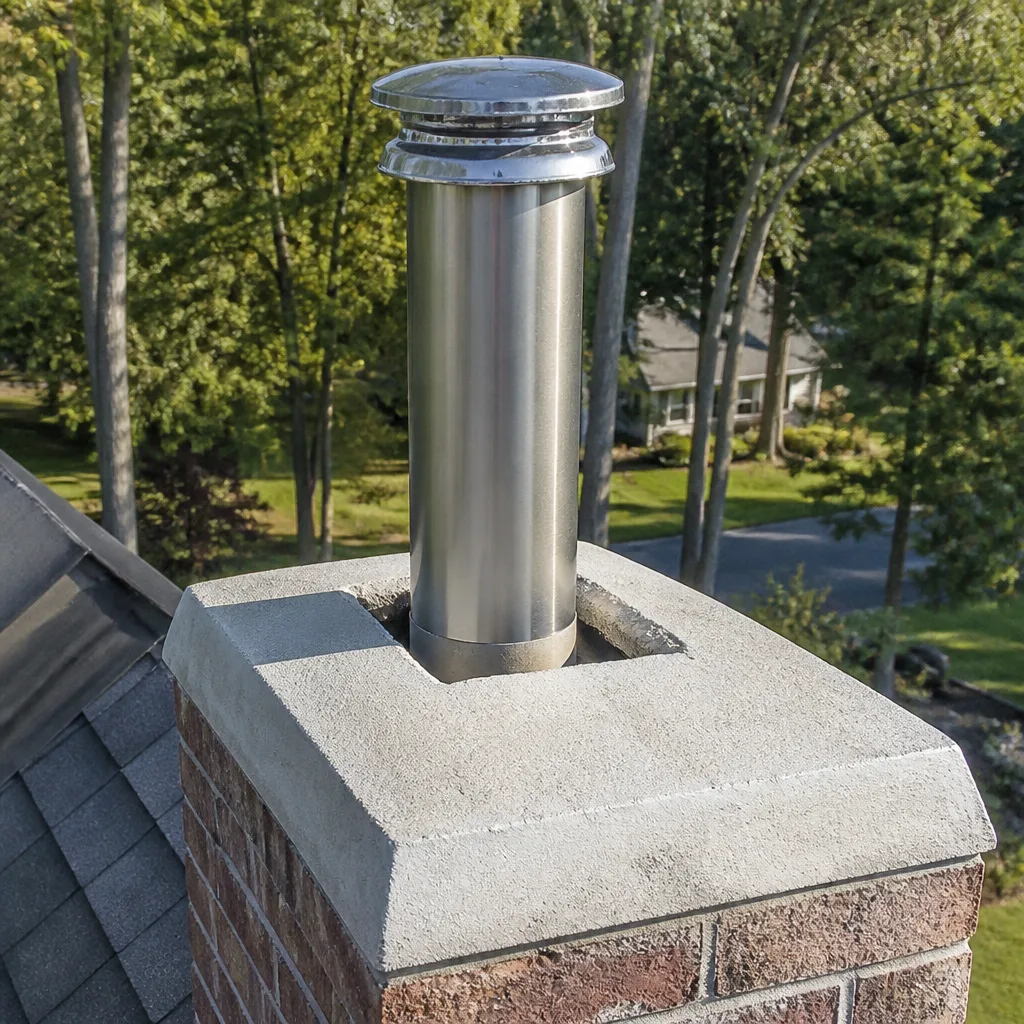 Flue relining
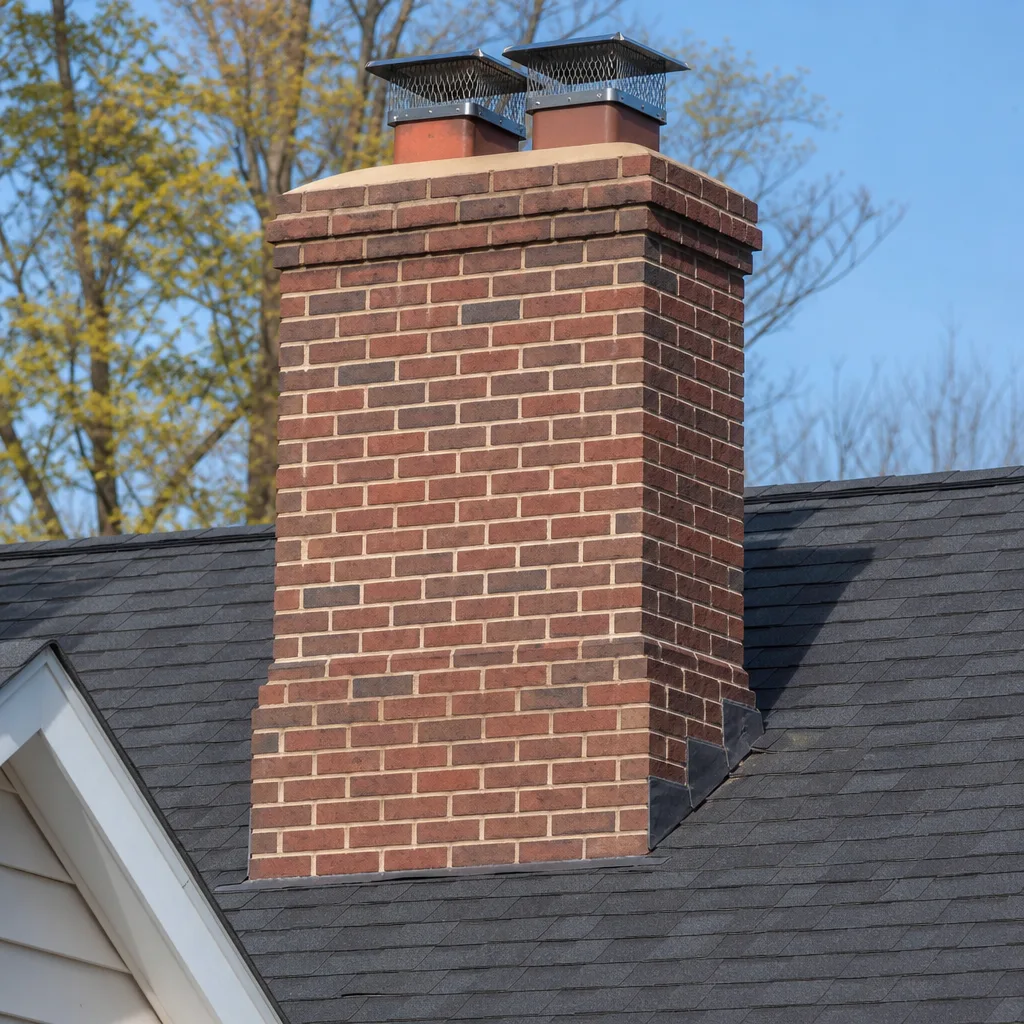 Masonry repair
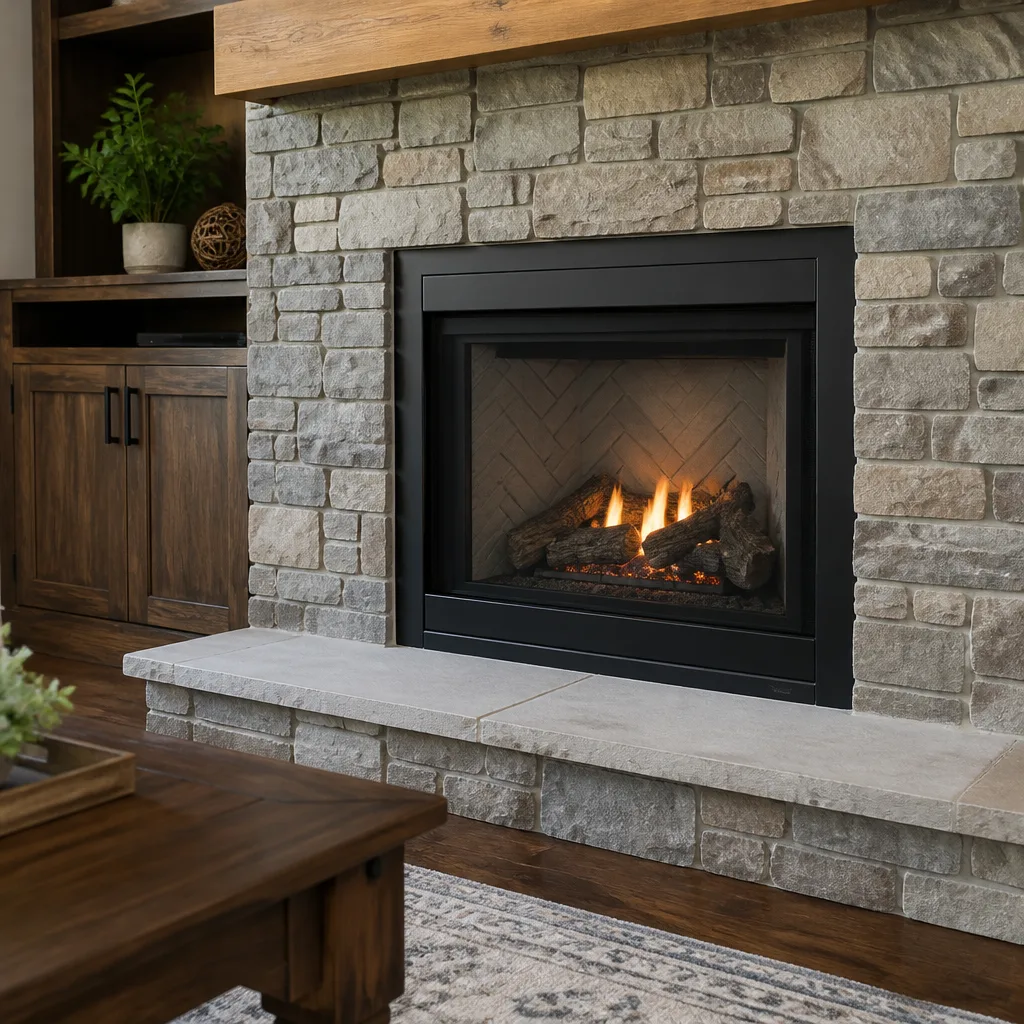 Gas fireplace service
Level 1 sweep and inspection to the NFPA 211 annual standard - flue, crown, cap, and flashing checked and photographed
Chimney sweep logs do not sweep chimneys. They loosen some creosote - which then falls where a brush and vacuum still have to collect it.
Chimney Cleaning Warning Signs: A San Diego Homeowner’s Reference Guide
Here’s a number most San Diego homeowners don’t expect: the average fireplace in our city gets used about six times a year. That’s not a flaw, it’s just the reality of coastal Southern California living. But it creates a problem. Six fires a year means you have almost no frame of reference for what “normal” looks like. A damper that’s corroded halfway shut, a firebox joint that’s opened up, a flue that’s become a pigeon’s studio apartment, all of it can go unnoticed for years, because you simply haven’t seen the fireplace often enough to notice the change. This guide is built to close that gap. You’ll learn the subtle visual, olfactory, and auditory signals that indicate your San Diego chimney needs attention, and what to do about each one.
Quick Answer
The most common chimney warning signs in San Diego are not dramatic. They’re a faint smoke smell that lingers in the living room after a fire, a thin white residue called efflorescence on the exterior chase or firebox surround, a damper that’s stiff or won’t stay open, and sounds of animals in the flue. Ideally, have your chimney swept and inspected once a year, even with light use, following a Chimney Sweep Maintenance Checklist for San Diego Homeowners.
Styles & brands we work with
Table of Contents
- Visual Signs You Can Spot From Inside the Firebox
- That White Staining (Efflorescence) Is More Urgent Than You Think
- Normal Smoke Smell vs. Draft Reversal: How to Tell the Difference
- The Sound Signatures of Animal Intrusion: Active vs. Historic
- Why a Fireplace That “Smokes a Little” in San Diego Is Almost Never Minor
- How Often Should a Chimney Be Swept in San Diego?
- What Does a Chimney Sweep Cost in San Diego?
- When to Call a Professional
- Frequently Asked Questions
Visual Signs You Can Spot From Inside the Firebox
You don’t need a ladder or a headlamp to read most of the early warnings your fireplace is sending. You just need to know what to look for from the hearth, on your hands and knees, with a flashlight. This is the inspection you can do in five minutes before you make a fire, and it catches more problems than any other single check. Here’s what we look for on a Chimney Inspection in San Diego, and what you can see yourself.
First, look at the back wall of the firebox, where the fire sits. You’re looking for cracked or missing mortar between the firebricks. When a firebox joint opens up even an eighth of an inch, it’s not cosmetic. Heat from the next fire travels through that gap and into whatever is behind the firebox, and in many San Diego homes built before the 1980s, that’s wood framing. A gap in the firebox is a direct path for fire to reach combustible material. What you see might be a hairline crack. What we see is a repair that should be done before the next burn season, not after.
Second, look at the damper, the metal plate just above the firebox opening. A damper in good shape opens and closes with a smooth, positive motion. A damper that’s corroded, warped, or flaking rust is sending you a clear signal that moisture has been getting into the flue. In San Diego, that moisture almost always comes from two places: our winter rain, which blows directly into uncapped flues, and the marine layer, which condenses on cool chimney interiors during summer mornings. A rusted damper is not a nuisance; it’s a symptom of water intrusion that will eventually damage the flue liner above it.
Third, look for any dark staining or “vegetation” on the firebrick. If you see green or black growth, you have moisture. If you see a thin, shiny black glaze on the firebrick, that’s creosote, a byproduct of wood smoke that condenses on cool chimney surfaces. In San Diego’s mild climate, creosote builds up more slowly than it does in cold-weather markets, which means a homeowner who burns six fires a year might build up enough creosote in three years to create a real fire hazard. If it’s shiny, it’s concentrated. If it’s shiny and you’re burning unseasoned wood, it’s concentrated faster.
- Cracked or missing firebox mortar: call for repair before the next fire. This is a fire-clearance issue.
- Rusted, warped, or stuck damper: indicates water intrusion. The flue above needs inspection.
- Shiny black glaze on firebrick (creosote): indicates a flammable buildup that a sweep should remove before the burn season.
- Green or black staining on brick: indicates chronic moisture. The source is likely above the firebox.
That White Staining (Efflorescence) Is More Urgent Than You Think
Walk outside and look at the chimney chase on the side of your house. That white, chalky residue you see on the stucco, brick, or stone is called efflorescence. It’s not mold, and it’s not paint. It’s dissolved salts that have been carried to the surface by water moving through the masonry. Here’s what most guides don’t tell you: efflorescence is not a problem by itself. It’s the receipt. The problem is the water.
When you see efflorescence on a chimney chase in a San Diego neighborhood like Clairemont or Rancho Bernardo, you’re looking at years of water migrating through the chimney’s exterior. That water is doing three things. It’s corroding the metal flashing where the chimney meets the roofline. It’s degrading the mortar joints inside the chase in freeze-thaw cycles that, yes, we do get on cold winter nights in East County. And it’s working its way down to the firebox, which is why you’ll sometimes see white staining on the firebox surround indoors, near the floor. That interior efflorescence means water has already traveled from the chase, through the structure, and out through the masonry around the firebox opening. The path exists. The damage is ongoing.
We’ve inspected chimneys in San Diego where the homeowner saw efflorescence five years ago, wiped it off with a brush, and never thought about it again. The chase looked fine. The flashing underneath didn’t. When we opened those chases, we found corroded flashing, saturated insulation, and in two cases, dry rot in the surrounding framing. The fix at that stage is not a chimney sweep. It’s a repair, and it’s more expensive than it would have been at the first sign of staining. If you see white residue on the exterior chimney, call a chimney professional to trace the water path. If you see it indoors around the firebox, call sooner.
Normal Smoke Smell vs. Draft Reversal: How to Tell the Difference
A wood-burning fireplace has a smell. That’s normal and good. You can smell the fire while it burns, and for a few hours after, the firebox carries a faint, dry, smoky scent. That’s not a warning sign. What is a warning sign is the smell of smoke when there is no fire, or a current of cold air that pushes down into the room when the fireplace is cold. Both of these are draft-related, and both point to a chimney that is not doing its job.
Draft is the upward flow of air through a chimney. It exists because of a difference in air pressure and temperature between the chimney and the room. A well-designed chimney moves smoke up and out. But in San Diego, we have a specific problem: our houses are built for cooling, not heating. They leak air. Bath fans, kitchen exhaust hoods, and furnace returns all pull air out of the house, and when the house can’t get enough replacement air, it pulls it from the easiest source. That source is often the chimney, because the chimney is an open pipe to the outside. The result is a cold-air draft that moves down the flue and into the living room. A persistent smoke smell when the fireplace is cold is almost always this: air moving the wrong way through a dirty flue.
How do you tell the difference between normal smell and draft reversal? Here’s a simple test. Close the damper. Wait two or three hours. Stand in the room and breathe normally through your nose. If you smell smoke that wasn’t there before you opened the damper, the flue is communicating with the living space. That’s not a smell problem. That’s a airflow problem, and the causes include a chimney cap that’s missing, a flue that’s too short for the roofline, an appliance fan that’s depressurizing the home, or a flue liner that’s deteriorated and no longer drafting. Each of these is a structural or mechanical issue. None of them fixes itself.
The Sound Signatures of Animal Intrusion: Active vs. Historic
San Diego’s chimney stacks are prime real estate. Raccoons climb them in Clairemont and La Mesa. Pigeons nest on the cap in Hillcrest and North Park. Squirrels chew through the chase in Poway and Escondido. And bats roost in the flue in every canyon-adjacent community we serve. Most homeowners discover the animal by sound before they see any other sign. The sounds are distinct, and they tell you whether the intrusion is current or leftover.
Here’s a quick audio key. Scratching, scampering, or chewing noises that you hear at night, especially around dusk and dawn, indicate an active animal. In San Diego, that’s usually a raccoon or a rat in the chase or flue. Cooing, warbling, or wing-flapping, usually during the day, indicates pigeons nesting on the cap or in the smoke chamber. High-pitched chittering or a dry, papery rustle usually indicates bats or a squirrel. What you’re hearing is the animal moving, feeding, or nesting. It’s not a ghost, and it’s not the house settling.
If you hear the sound once, then hear it again at the same time the next day, the animal is active. If you hear nothing but you find dried droppings on the hearth, a dead bird at the cleanout door, or tufts of fur in the firebox, the animal is gone, but the nest is still there. A historic intrusion still matters. Nests block the flue and create a carbon monoxide risk if you light a fire. Droppings carry histoplasmosis spores. And the animal, whether active or not, has often damaged the damper, the liner, or the cap. The solution for an active animal is never to “smoke it out.” It’s to remove the animal humanely, then cap the chimney and repair the damage. The solution for a historic intrusion is a sweep and inspection, because what the animal left behind will burn, and it won’t burn safely.
Why a Fireplace That “Smokes a Little” in San Diego Is Almost Never Minor
We hear this phrase all the time: “It smokes a little when I light it, but then it settles down.” In a cold-climate city where fireplaces are used daily, a little startup smoke might be a minor annoyance. In San Diego, where a fireplace might sit unused for ten months at a stretch, “smokes a little” is almost never a minor issue. It’s a structural signal, and it usually traces to one of three common causes that are particular to our city.
The first cause is a flue that’s too cold to draft. This is the “settles down after a while” scenario. The flue is full of cold, dense coastal air, and the smoke from your first few logs can’t push through it. This is more common in San Diego than almost anywhere else in the country, because our flues are allowed to cool completely between uses. The fix isn’t a repair. It’s preheating the flue by holding a rolled-up piece of newspaper above the damper for a minute before you light the fire, as covered in The Complete Guide to Chimney Cleaning in San Diego. But here’s the catch: a flue that’s too cold to draft is also a flue that’s never been swept, because a clean flue preheats faster. So even the “minor” version of this problem points to a needed sweep.
The second cause is a flue that’s too short or a cap that’s too restrictive. San Diego’s building code requires a chimney to terminate at least two feet above any part of the roof within ten feet, horizontally. But homes built before the current code, especially in older neighborhoods like Mission Hills and University Heights, often have chimneys that are shorter than the surrounding roofline. A short chimney drafts poorly, and a poorly drafting chimney smokes into the living room on every fire. The fix is to extend the flue with a chimney pot or a length of steel liner. This is a structural repair, not a cleaning.
The third cause is a flue liner that’s no longer a continuous tube. In older San Diego homes with clay tile liners, years of heating and cooling cause the tiles to crack and shift. When a tile shifts, the smooth wall of the flue becomes a rough, irregular surface, and smoke swirls and stalls instead of drafting up and out. The result is the “smokes a little” symptom that never really goes away. This is the most serious of the three, because a cracked liner allows heat and carbon monoxide into the chase, and that’s a fire and health risk. If your fireplace smokes, and preheating the flue doesn’t fix it, the liner needs a camera inspection. You shouldn’t light another fire until the liner is checked.
How Often Should a Chimney Be Swept in San Diego?
The National Fire Protection Association says chimneys should be swept at least once per year, and we follow that standard at Chimney Sweep in San Diego. But yearly is a minimum, not a target, and here’s the nuance for San Diego homeowners. The frequency depends on what you burn, how often you burn, and whether you burn wood or use a gas log set. A homeowner who burns six to ten fires a year with seasoned wood and has the chimney inspected at the end of the burn season might find that every two years is sufficient. A homeowner who burns unseasoned wood, or who burns pine or eucalyptus from their property, will build up creosote faster and should sweep every year. A homeowner with a gas log set should still have the chimney inspected annually, because gas logs produce water vapor, and water vapor does its own kind of damage to masonry and flue tile.
Here’s a practical way to think about it. A sweep is insurance against a chimney fire, and a chimney fire in San Diego is not less serious just because the weather is mild. A chimney fire reaches temperatures of 2,000 degrees Fahrenheit, and it doesn’t care what neighborhood it’s in. It can spread to the roof framing in minutes. A yearly sweep, at a cost that we’ll describe below, is cheap insurance compared to a structural repair. And if you just bought the house, if you can’t remember when the chimney was last swept, or if you’ve been burning wood that wasn’t fully dry, the answer is now, not next season.
What Does a Chimney Sweep Cost in San Diego?
You’ll be glad to hear this isn’t a mystery service with mystery pricing. In the San Diego market, a standard chimney sweep for a wood-burning fireplace typically runs between $229 and $329, depending on the height of the roof, the condition of the flue, and whether there’s an animal nest or heavy creosote that requires extra cleaning time. A sweep plus a full Level 1 inspection, which we recommend doing together at least once a year, runs between $279 and $399 in most of the city. Here’s the breakdown we use at Ashby Chimney San Diego.
| Service | Typical San Diego Range | What It Includes |
|---|---|---|
| Standard chimney sweep | $229 – $329 | Flue cleaning, firebox cleaning, damper check, cap check |
| Sweep + Level 1 inspection | $279 – $399 | Everything in the sweep, plus a visual check of all accessible chimney components |
| Level 2 camera inspection | $350 – $550 | Video scan of the flue interior, recommended after an animal intrusion or before a liner decision |
| Flue liner repair (varies by length) | $1,500 – $4,500 | Stainless steel liner installation or HeatShield resurfacing, depending on the liner damage |
These are San Diego prices, not national averages. We’re not quoting the cheapest sweep in the city, and we’re not quoting a number that doubles at the door. The price we write down before the appointment is the price you pay, and if the sweep turns up a problem that adds cost, you’ll see the exact number and the reason for it before any work starts. If the flue needs a repair, like a new liner, you’ll get a written estimate. You’ll also get a camera image of what we saw, so you can see the damage yourself. No homeowner in San Diego should be told they need a $3,000 liner without seeing the video that proves it.
See the difference
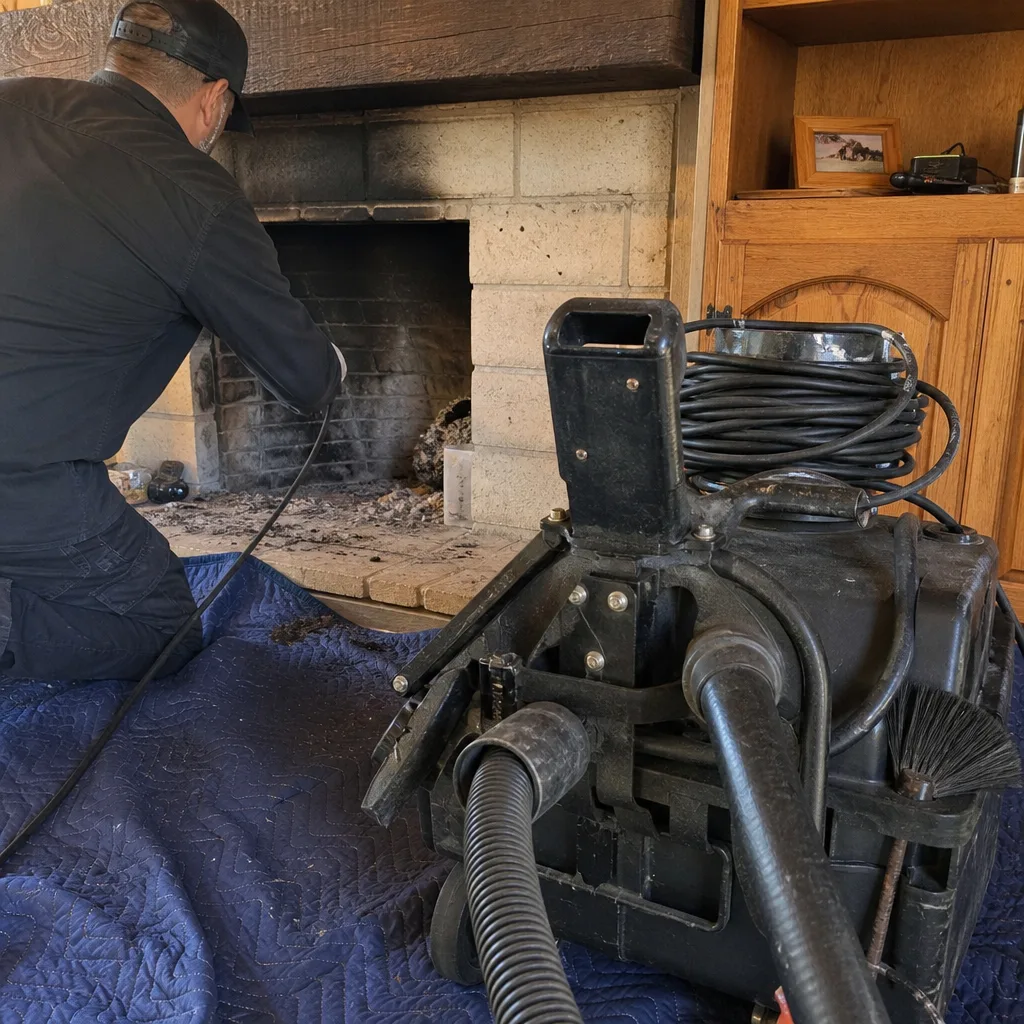 Before
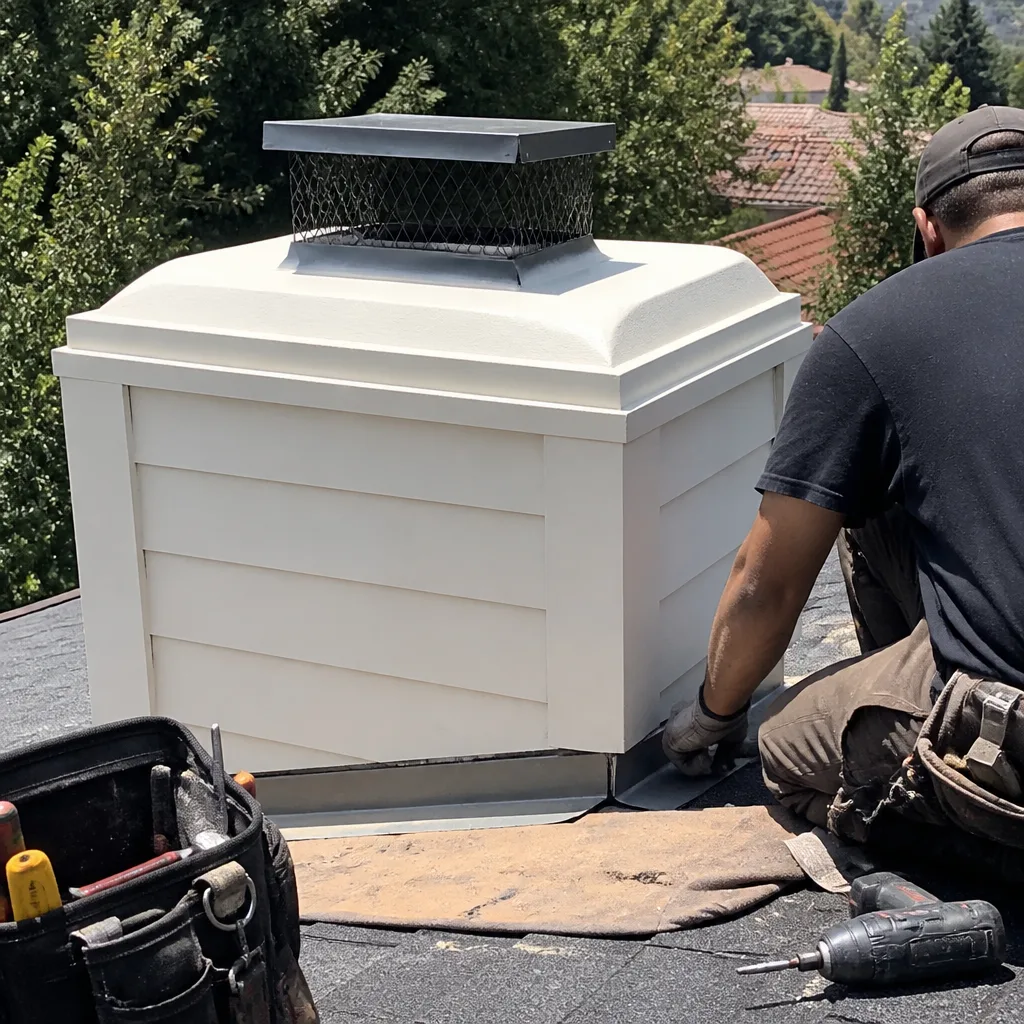 After
After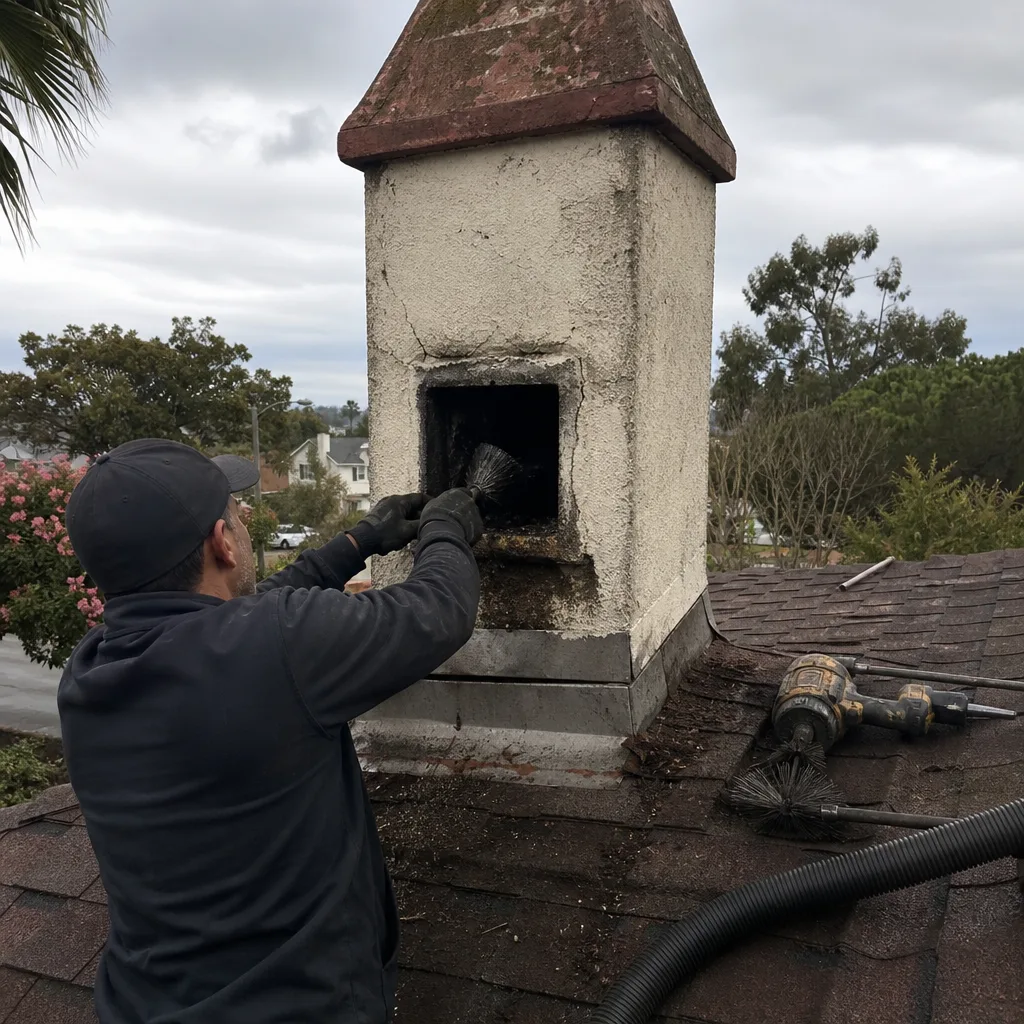 Before
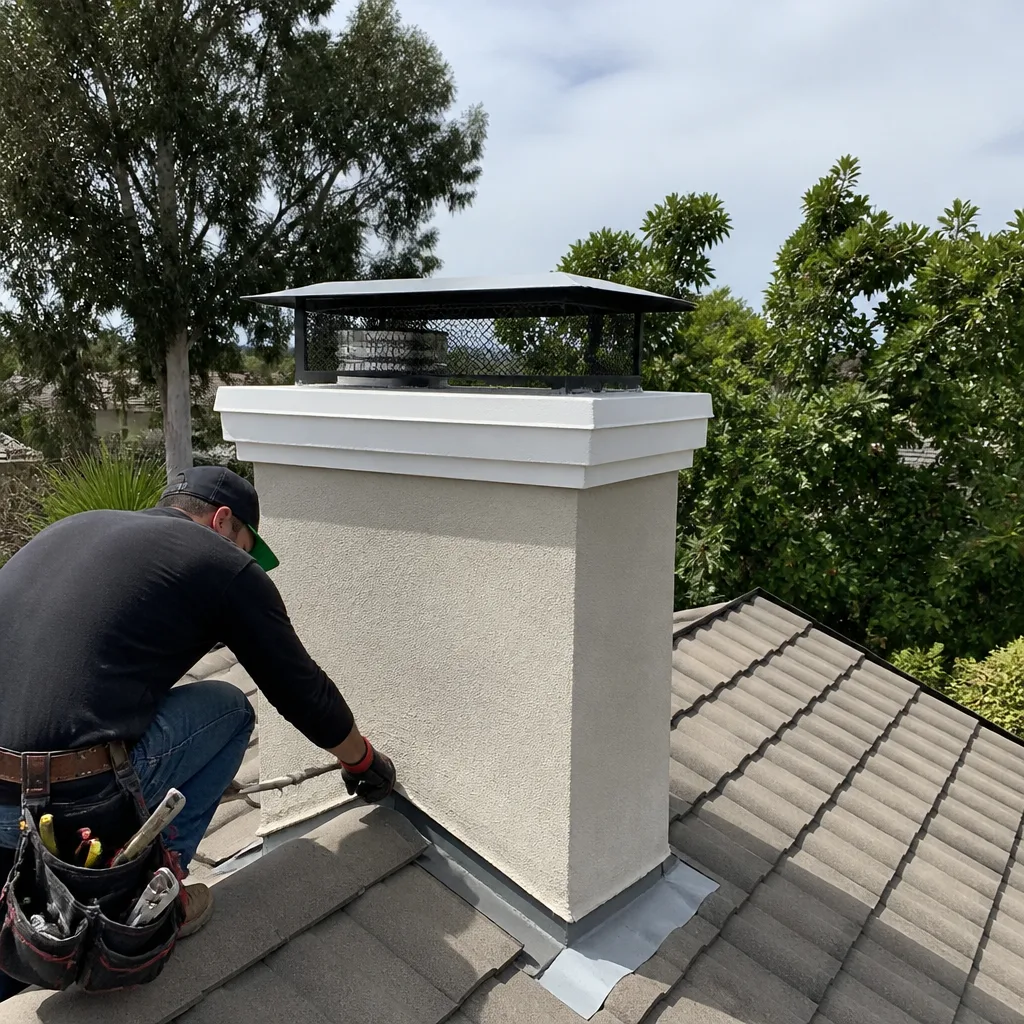 After
After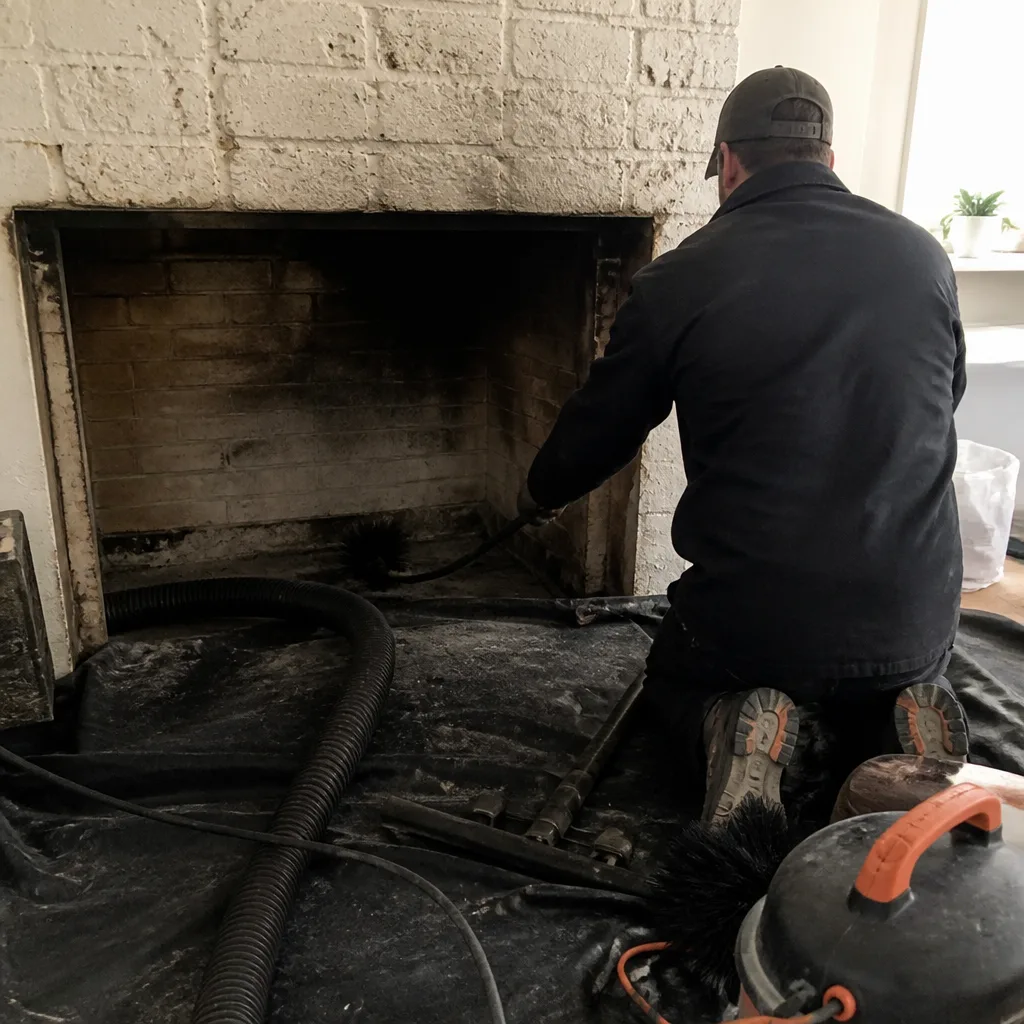 Before
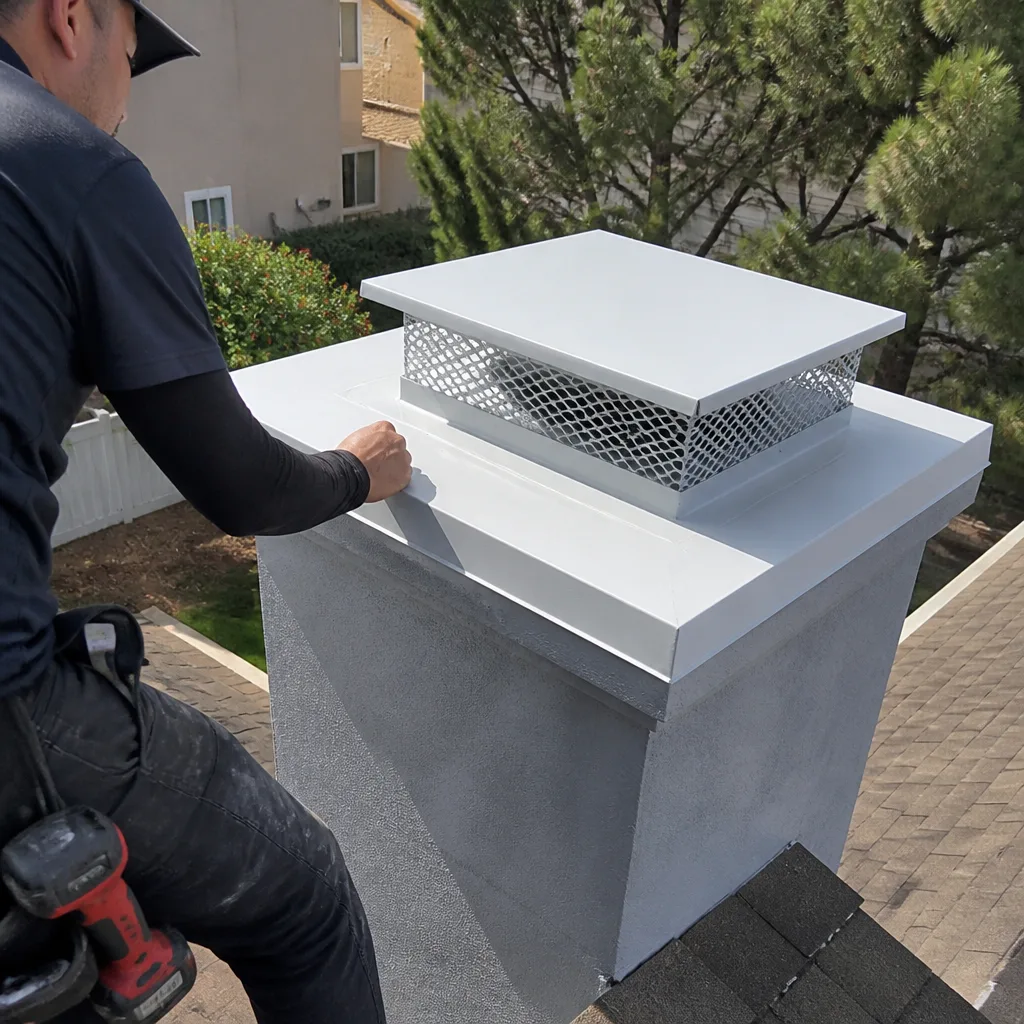 After
AfterCommon Mistakes to Avoid
- Assuming a mild climate means a clean chimney. San Diego’s coastal moisture actually accelerates some forms of flue damage, because damp masonry and cool flue interiors are exactly where creosote and efflorescence form. Less use doesn’t mean less risk.
- Ignoring a “little” smoke because it only happens on startup. A fireplace that smokes at all is a flue, liner, or height problem. It won’t fix itself, and it won’t get better with another season of use.
- Scrubbing off efflorescence and calling it done. The white stain is not the problem. The water moving behind it is. Removing the stain without tracing the water just means the damage continues invisibly.
- Smoking out an animal in the flue. Never light a fire to evict a raccoon, pigeon, or squirrel. You’ll either kill the animal, drive it into the living space, or start a chimney fire with the nest it leaves behind.
- Waiting until fall to book a sweep. San Diego’s burn season is short and bookends the holidays. The sweep companies that are worth hiring are booked solid in October and November. Book in late summer and you’ll get the date you want.
- Trusting a verbal repair quote. A homeowner who’s already been burned once knows better than to accept a number over the phone that’s “subject to change.” Ask for the broken-out price in writing before the work starts, and ask what happens if the repair fails.
When to Call a Professional
Some warning signs can wait until the end of the season. Others can’t. Call a chimney professional in San Diego today if you smell smoke when the fireplace is cold, if you see white efflorescence on the interior firebox surround, if you hear an active animal in the flue, or if the fireplace has smoked on more than two occasions despite preheating the flue, as explained in our DIY vs Professional Chimney Cleaning: The San Diego Homeowner’s Decision Guide. These are not “watch and wait” signals. They indicate water, structural damage, or a carbon monoxide path, and each one gets more expensive the longer it sits. Ashby Chimney San Diego offers free estimates in San Diego, and every estimate includes a written price before any work starts. Call (619) 693-1499 to book a sweep, an inspection, or a repair.
Frequently Asked Questions
Look for a dark, shiny buildup on the firebox walls, a damper that’s stiff or rusted, a smoke smell when the fireplace is cold, or any sign of animals in the flue. If it has been more than a year since the last sweep, schedule one now.
A cracked liner often shows up as “smokes a little” symptom that doesn’t improve when you preheat the flue, bits of clay tile at the bottom of the firebox, or water staining on the interior walls. A camera inspection is the only way to confirm the damage and size a repair.
It depends on the damage. Small cracks in a clay tile liner can sometimes be resurfaced with HeatShield, a ceramic-cast material that seals the flue from the inside. A liner that has shifted, collapsed, or spalled in multiple places needs replacement with stainless steel, typically a DuraFlex or Olympia Chimney system. We’ll show you the camera footage either way, so you can see exactly what we’re recommending.
For a lightly used fireplace in San Diego, skipping one year is often fine, provided the chimney was clean the year before and no animals moved in. But if you’ve skipped multiple years, or if you’ve been burning unseasoned wood, the creosote can build to a flammable level without any visible sign. A chimney fire is the first warning in some homes, and by then, the damage is done.
A chimney cap keeps rain, birds, raccoons, and debris out of the flue. It’s the single most cost-effective piece of chimney protection you can add, and most San Diego homes either lack a cap or have one that’s deteriorated from salt air and sun. A damaged cap is a direct path for water intrusion.
If you have no warning signs and the chimney was swept within the last year, you can burn carefully. If you have any smoke, smell, animal, or efflorescence warning signs, stop using the fireplace until the chimney has been inspected. It’s better to lose a few cozy evenings than to light a fire above a cracked liner or an animal nest.
The Bottom Line
The dangerous chimney problems in San Diego are not the obvious ones. They’re the faint smoke smell in March, the white stain on the chase that’s been there for three years, the rusted damper that won’t quite close, and the scratching sound in November that you assumed was the wind. A homeowner who uses the fireplace six times a year has no baseline, so by the time the problem is obvious, it’s often expensive. The answer is simple: learn the warning signs, check the firebox before each burn season, and have the chimney swept and inspected once a year by a company that gives you a written price and a written guarantee, and explore more guides & resources to keep your chimney safe. If it’s not done right, it should be made right. That’s the standard every San Diego homeowner deserves.
Call Ashby Chimney San Diego at (619) 693-1499 for a free estimate. Nathan Corliss and the team serve San Diego and the surrounding communities, and we’re available 24/7 for questions, scheduling, and emergency repairs. To learn more about our full range of services, visit our Ashby Chimney San Diego home page, or read about our Fireplace Repair in San Diego services.
Written by Nathan Corliss, Owner at Ashby Chimney San Diego, serving San Diego since 2002.