
Last updated October 15, 2026
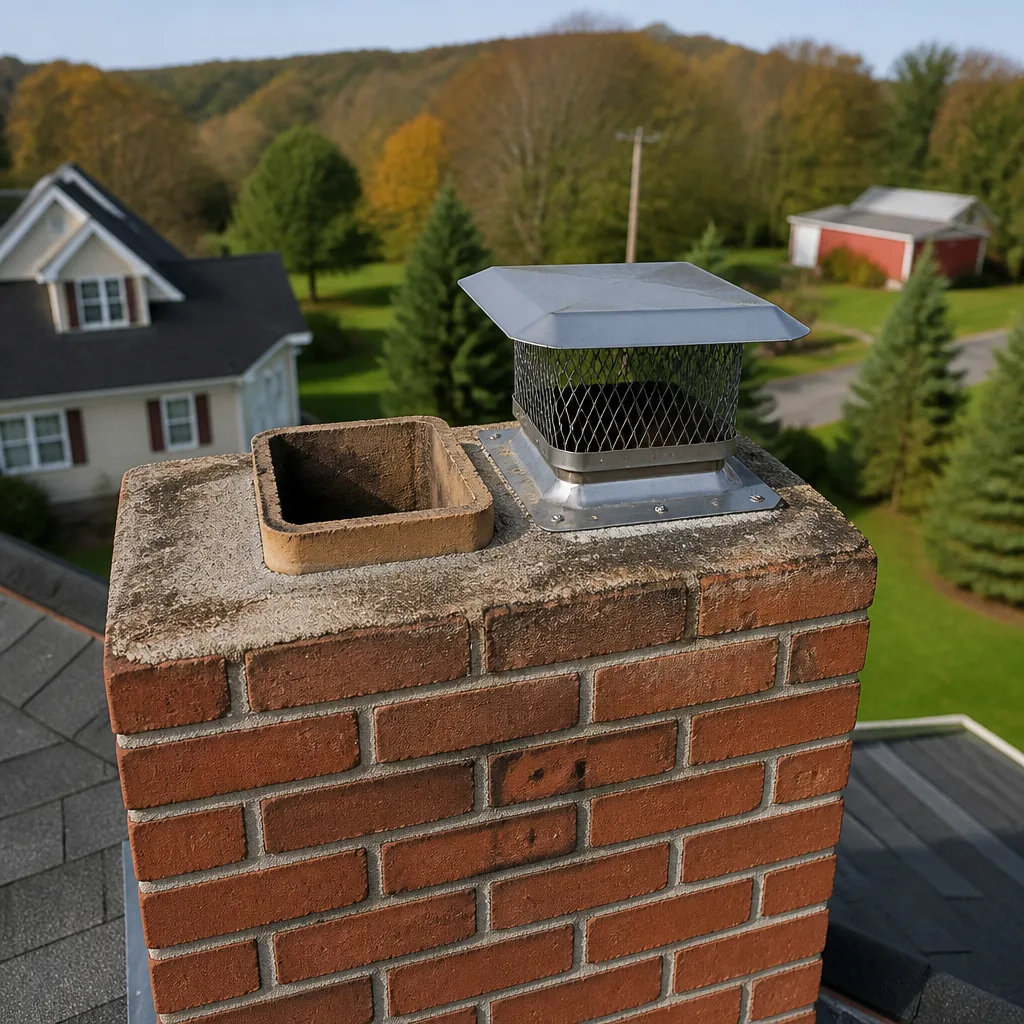 Sweep & inspection
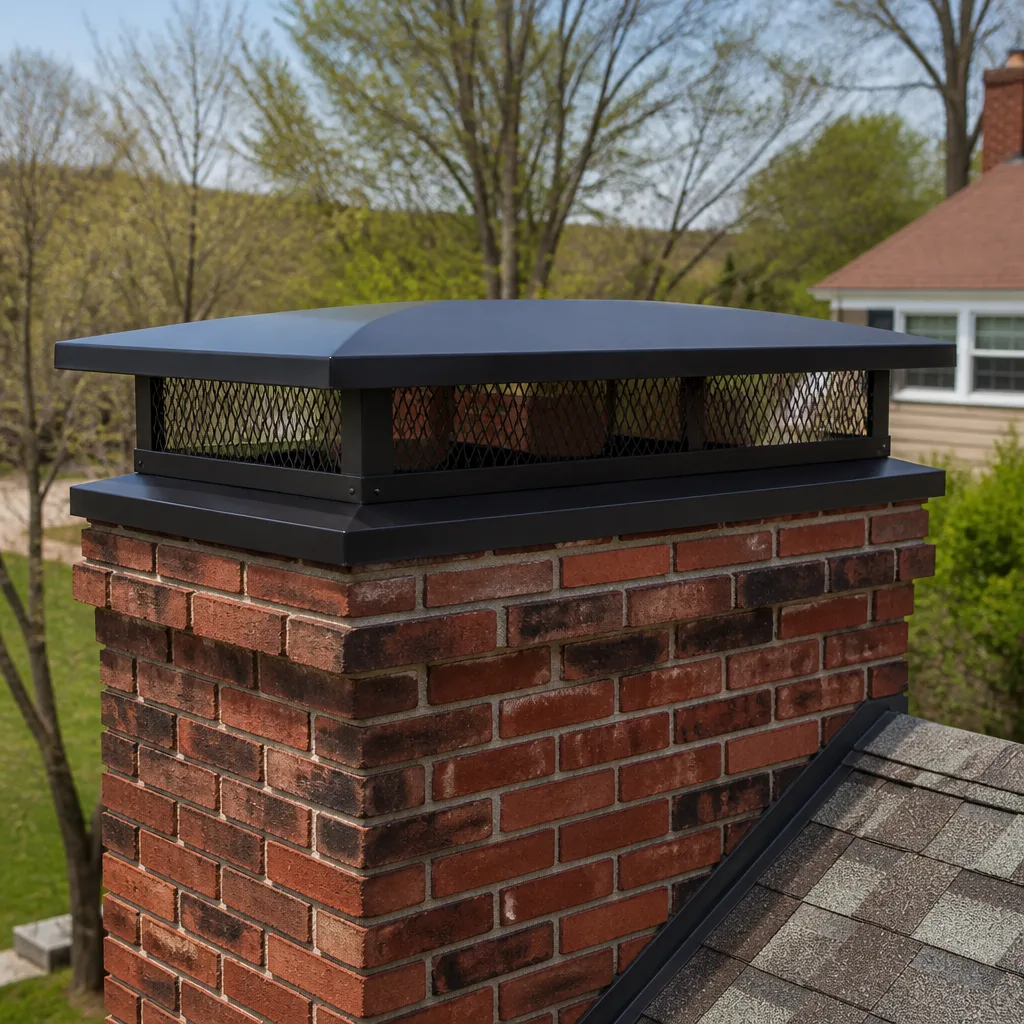 Caps & crowns
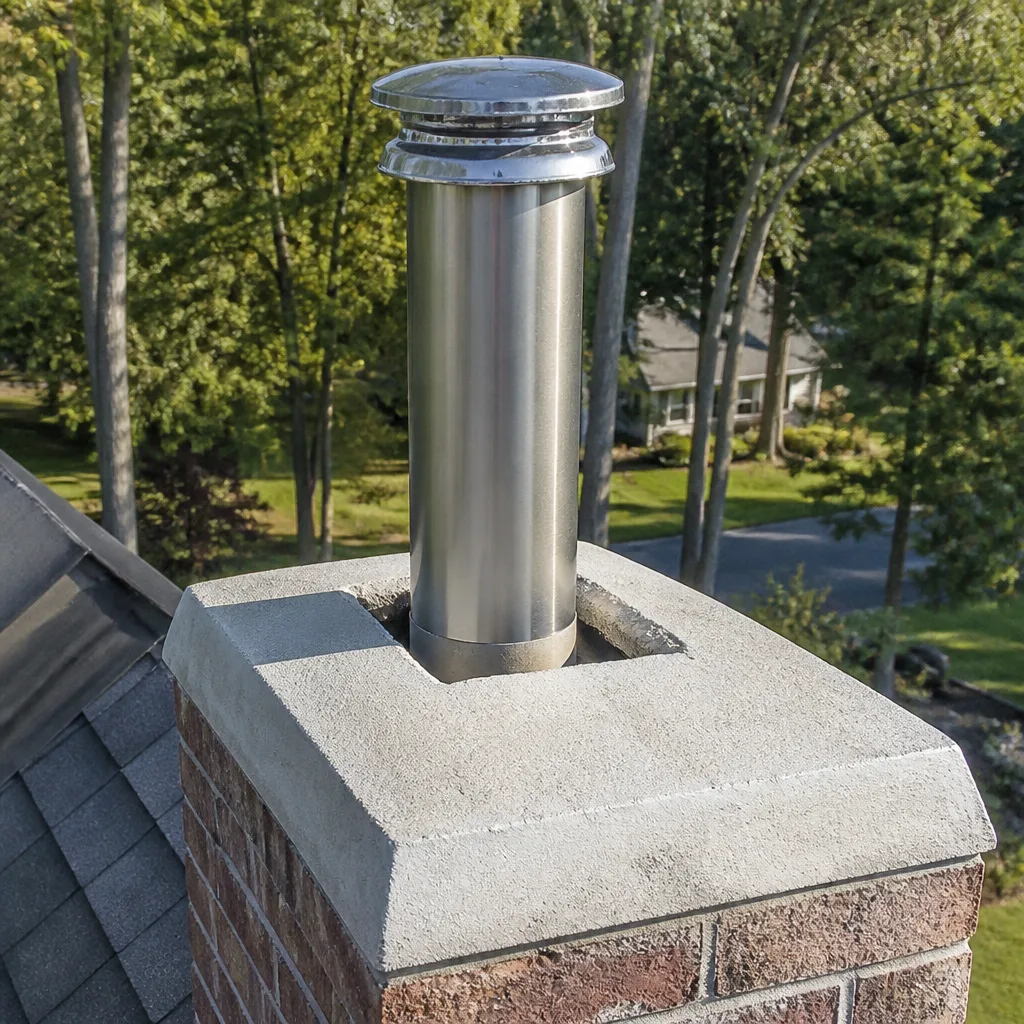 Flue relining
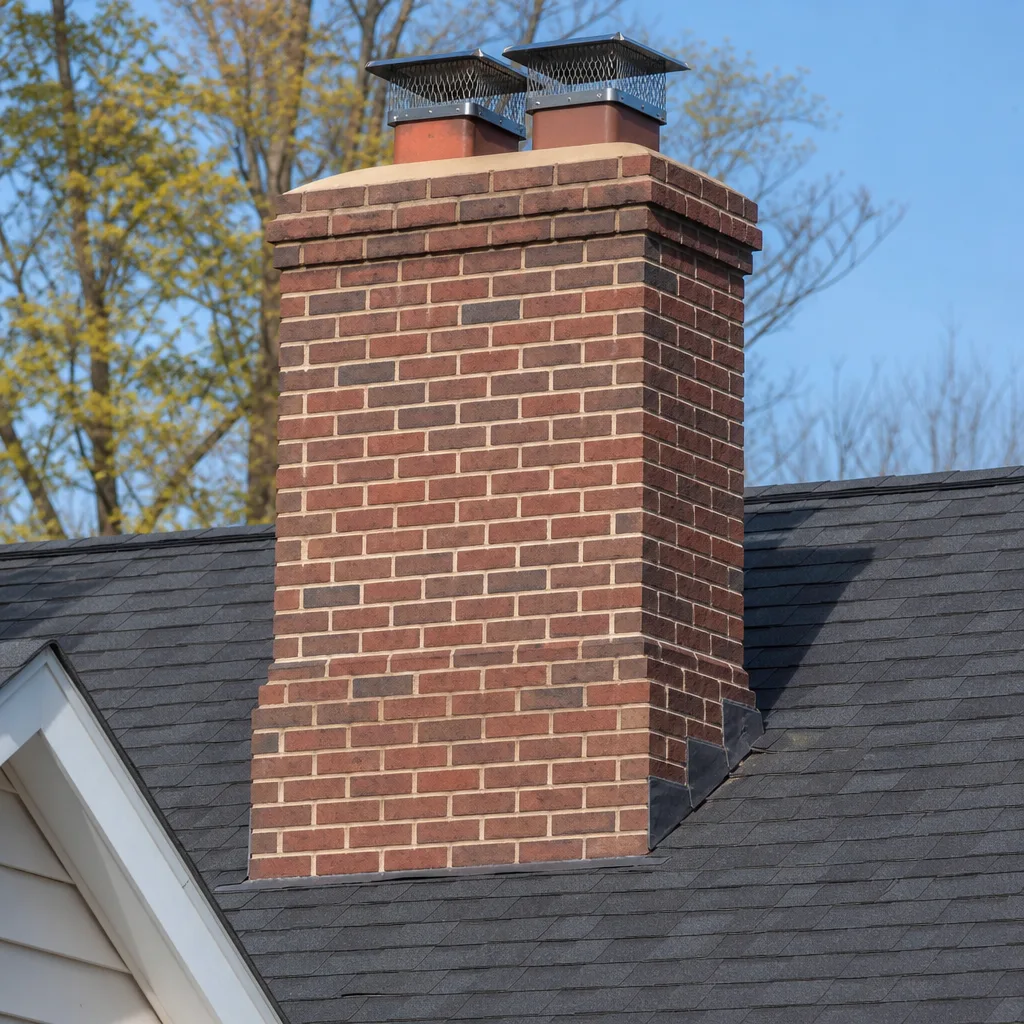 Masonry repair
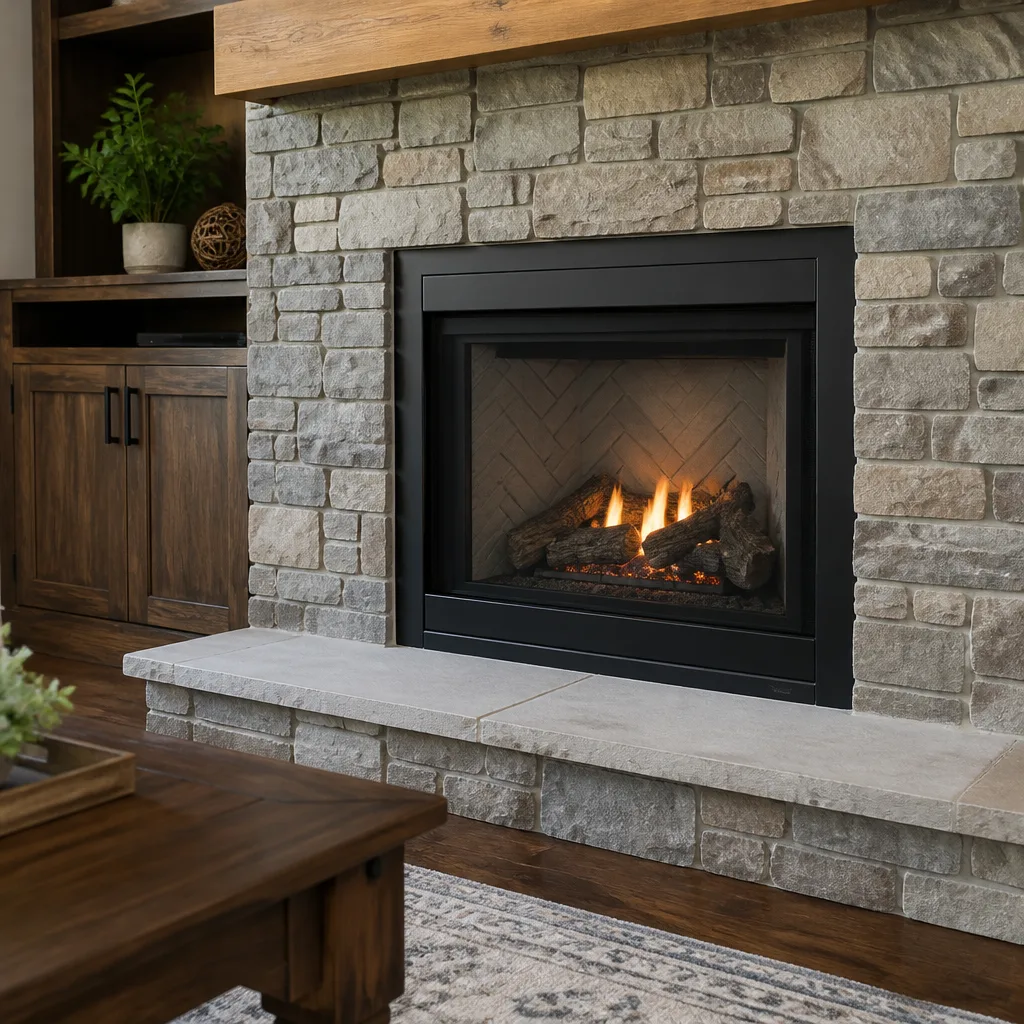 Gas fireplace service
Level 1 sweep and inspection to the NFPA 211 annual standard - flue, crown, cap, and flashing checked and photographed
Chimney sweep logs do not sweep chimneys. They loosen some creosote - which then falls where a brush and vacuum still have to collect it.
The Complete Guide to Chimney Cleaning in San Diego
Most San Diego homeowners use their fireplace fewer than 20 nights a year and assume that means their chimney is basically fine. It’s not. Low-use flues collect more moisture-driven corrosion and animal intrusion than high-use ones, because there’s no regular heat cycle to dry things out. Add coastal salt air, marine layer humidity, and eucalyptus firewood into the mix, and you have a set of conditions that generic chimney guides written for cold-weather states never address. This guide explains what chimney cleaning actually looks like inside a San Diego home: what it costs, what a real sweep includes, what gets skipped, and how to know the difference. For more, explore our more guides & resources.
Quick Answer
Chimney cleaning in San Diego typically costs between $189 and $340 for a standard sweep, depending on flue condition, roof access, and whether you’re burning wood or gas. A proper cleaning removes creosote and soot, checks the flue liner for cracks or blockages, and includes a basic visual inspection of the damper, firebox, and chimney cap. Most San Diego homes should be swept every 1 to 2 years, even with light use, because coastal moisture and low heat cycles create stickier creosote and faster metal corrosion than you’d see in a colder, drier climate.
Styles & brands we work with
Table of Contents
- Why Low-Use Fireplaces in San Diego Still Build Up Creosote
- The Eucalyptus Problem: San Diego’s Favorite Firewood and What It Does to Your Flue
- What a Proper Chimney Sweep in San Diego Actually Includes
- What a Level 1 CSIA Inspection Covers vs. What Most Sweeps Skip
- Coastal Salt Air and Your Chimney: Pacific Beach, Ocean Beach, Coronado
- How Much Does Chimney Cleaning Cost in San Diego?
- What a Completed Job Should Look Like: The Baseline Every Homeowner Should Expect
- How Often Should You Sweep a Chimney in San Diego?
Why Low-Use Fireplaces in San Diego Still Build Up Creosote
Here’s the counterintuitive part: a fireplace that gets used twice a month can be dirtier, stickier, and more dangerous than one that gets used every weekend in a cold climate. The reason comes down to combustion temperature and moisture.
When you build a fire, the wood releases smoke that contains unburned wood particles, water vapor, and volatile organic compounds. As that smoke rises through the flue, it cools. If the flue is cold, because you haven’t used the fireplace in three weeks, the cooling happens faster. Those compounds condense on the flue walls as creosote. In a frequently used fireplace, each new fire bakes some of that creosote into a dry, flaky layer that a sweep removes relatively easily. In a low-use fireplace, the creosote never fully dries. It stays gummy, tarry, and acidic.
Now add San Diego’s marine layer. From late spring through early fall, humidity in neighborhoods like Clairemont, Mira Mesa, and La Jolla regularly sits at 70 to 85 percent overnight. That moisture penetrates the flue and keeps creosote deposits soft and sticky. A sticky flue wall grabs more smoke particles with every fire. The result is a dense, tar-like glaze that is harder to remove and more flammable than the dry stuff. Stage 1 creosote is a light soot that brushes off. Stage 3 is a hardened, glossy glaze that often requires chemical treatment or mechanical removal, and it’s not rare to find Stage 2 or 3 in a San Diego fireplace that gets lit only on Christmas and Super Bowl Sunday.
We’ve swept flues in Tierrasanta and Scripps Ranch where the homeowner told us, “We barely use it,” and the creosote buildup suggested otherwise. The point: infrequent use is not the same as clean. If anything, it means the chimney should be checked on a schedule, not ignored.
For more on what a standard cleaning involves in our area, see our full breakdown of Chimney Sweep in San Diego.
The Eucalyptus Problem: San Diego’s Favorite Firewood and What It Does to Your Flue
Walk through any San Diego neighborhood east of the 5, and you’ll see eucalyptus trees lining the streets and filling the canyons. They shed constantly. And a lot of homeowners, understandably, collect the fallen branches and burn them. It’s free wood. The problem is that eucalyptus burns differently from oak or almond.
Eucalyptus is an oily, resinous hardwood. Fresh eucalyptus can contain up to 30 percent moisture by weight, but even seasoned eucalyptus retains a high oil content that produces a thick, dense smoke. That smoke carries a heavier load of unburned particulates than most other woods you’d burn in a fireplace. When it condenses on your flue walls, it forms an unusually dense creosote that adheres aggressively. In our experience, eucalyptus creosote tends to dry into a flaky, tar-heavy layer that can look like coffee grounds matted together. It’s harder to brush off than the fine soot left by seasoned oak, and it’s far more likely to require a second pass with the brush or a chemical glazing treatment.
Burning green or partially seasoned eucalyptus makes this worse. The high water content cools the fire and produces even more smoke and condensation. If you’re going to burn eucalyptus, it should be split and seasoned for at least 12 months, preferably 24, stored off the ground with good airflow. Even then, sweep twice as often as you would if you burned seasoned oak or manufactured logs.
A related local note: poison oak commonly grows near San Diego’s canyon eucalyptus groves. If you handle wood cut from canyon areas, check for poison oak vines wrapped around branches. The urushiol oil from poison oak can transfer to your hands and arms during cutting and stacking, and burning wood with poison oak vines attached can put those irritants into the smoke. It’s a nasty surprise that visitors from other parts of the country never think about.
What a Proper Chimney Sweep in San Diego Actually Includes
If you’ve never hired a chimney sweep before, you should know what the job is supposed to look like-our How to Hire a Chimney Cleaning Contractor in San Diego: A Step-by-Step Guide covers that too. A real sweep is not a guy with a shop vac and a wire brush showing up in flip-flops. Here’s the sequence a professional service follows.
- Floor and hearth protection. Drop cloths or tarps go down in front of the fireplace before any equipment comes inside. The technician should also protect surrounding furniture if the hearth is in a furnished living space. If no drop cloths come out, that tells you something.
- Firebox and damper inspection. The sweep checks the firebox floor and walls for cracked brick or refractory panels, opens and closes the damper to confirm it seats properly, and notes any rust or warping.
- Flue brushing. The actual cleaning is done with a rotating brush system sized to your flue, usually run from the top down or bottom up depending on access. The brush scrubs creosote and soot off the flue walls and pushes it down into the firebox area for removal.
- Smoke shelf and smoke chamber cleaning. This is the part most homeowners never see, and the part a lot of cheap sweeps skip. The smoke shelf sits just above the damper and catches a surprising volume of creosote, bird droppings, and old mortar. If it’s not cleaned, all that debris stays in place above your damper.
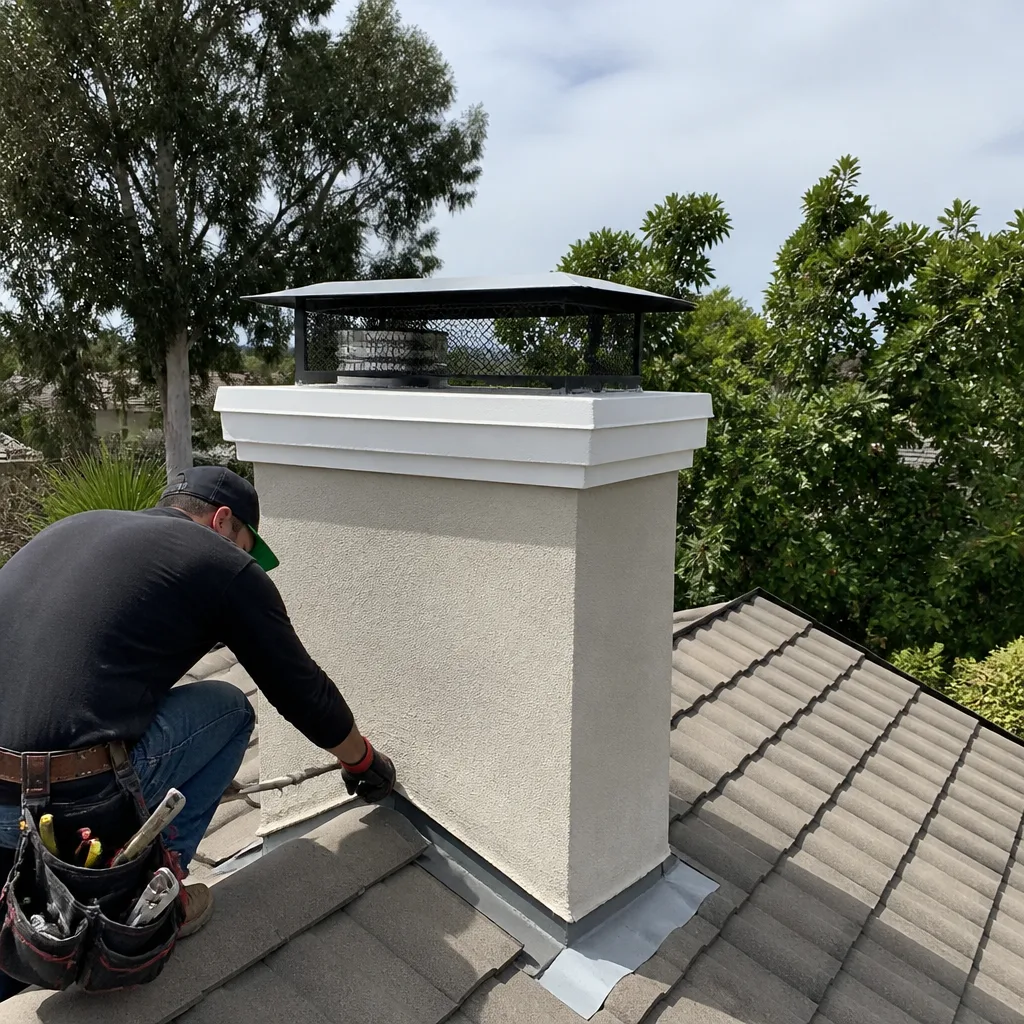
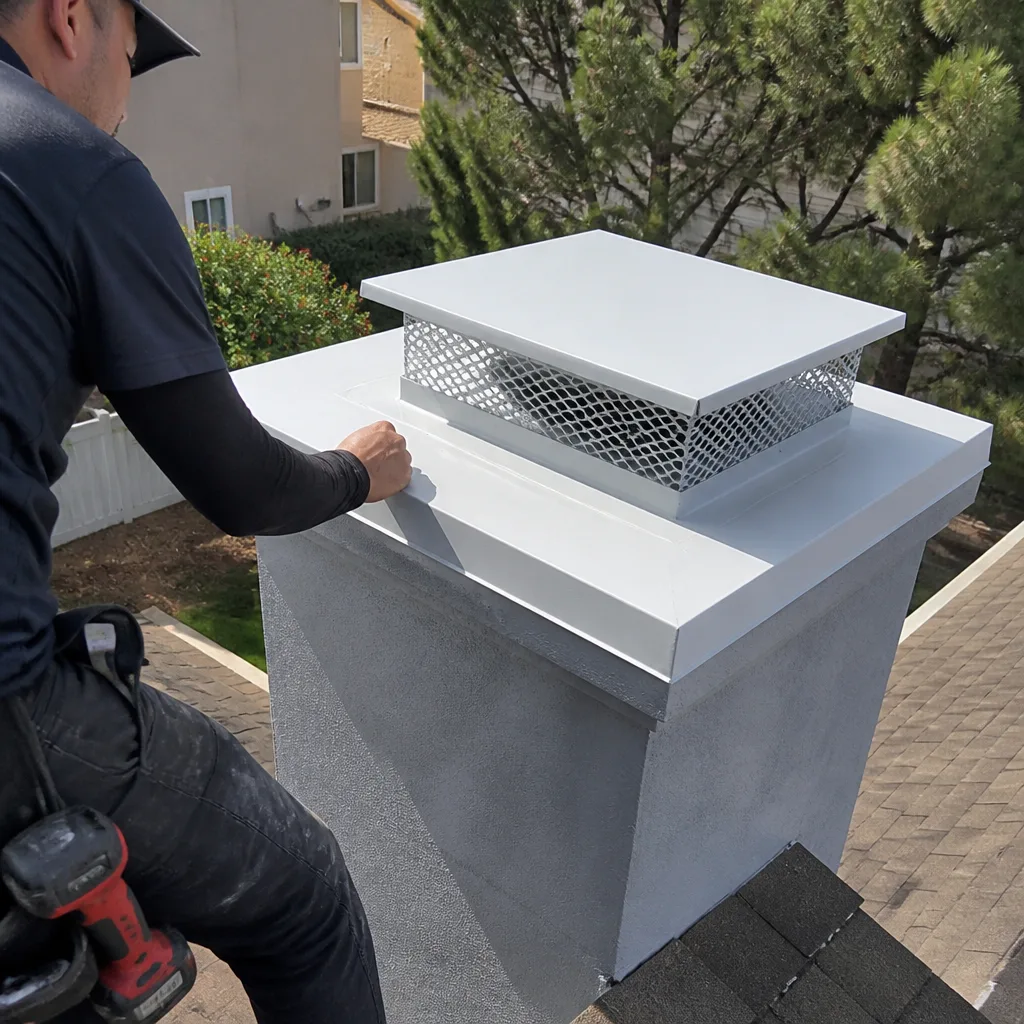
- Chimney cap and flue top check. From the roof, the sweep checks the cap for damage, looks for missing or rusted screens, and confirms nothing is blocking the flue opening.
- Removal of debris. Everything that came down the flue gets vacuumed out with a HEPA-filtered vac, not just pushed around. The hearth, firebox, and surrounding floor should be clean when the technician packs up.
- Written report. You get a summary of what was found, what was done, and any conditions that need attention. If a sweep leaves without giving you anything in writing, you didn’t get a complete job.
That’s the baseline. If a San Diego company quotes you under $100 for a sweep and shows up with no drop cloths, no HEPA vacuum, and no plan to get on the roof, you’re paying for a cosmetic dusting, not a chimney cleaning.
What a Level 1 CSIA Inspection Covers vs. What Most San Diego Sweeps Skip
The Chimney Safety Institute of America (CSIA) defines three levels of chimney inspection. A Level 1 is what you should get with every routine sweep. It’s a visual check of the readily accessible parts of the chimney: the firebox, damper, smoke chamber, flue interior (as far as can be seen with a light), and the exterior chimney structure from the roof. No special tools, no disassembly, no camera.
A proper Level 1 inspection should tell you:
- Whether the flue liner has visible cracks, gaps, or missing sections
- Whether the damper opens, closes, and seals correctly
- Whether the smoke chamber has excessive creosote or debris accumulation
- Whether the chimney cap or spark arrestor is intact
- Whether the exterior masonry or metal chimney has visible damage
- Whether there are signs of water entry at the crown or flashing
What many San Diego sweeps skip: actually getting on the roof to look at the cap and crown. If a company does a “sweep” by running a brush from the bottom and never goes up top, they can’t see a cracked crown, a rusted cap, or a flue liner spalling at the top. These are the exact failure points that lead to leaks and expensive repairs in coastal San Diego, where sun, salt, and moisture work on chimney crowns year-round.
We also regularly see chimneys where the Level 1 identifies a possible liner issue that can’t be confirmed without a camera. That’s when a Level 2 inspection, which includes a video scan of the flue interior, becomes necessary. You won’t be told that by a sweep who never looked in the first place. For a deeper look at what inspection levels mean for San Diego homes, read our guide to Chimney Inspection in San Diego.
Coastal Salt Air and Your Chimney: Pacific Beach, Ocean Beach, Coronado
If you live west of the 5, your chimney lives in a salt spray environment. Pacific Beach, Ocean Beach, Point Loma, Coronado, Imperial Beach: the same marine air that keeps these neighborhoods cool in August is quietly corroding metal components inside your chimney system.
Salt is hygroscopic, meaning it pulls moisture from the air. When salt particles settle on a metal damper, chimney cap, or fireplace door, they hold that moisture against the surface. The result is accelerated rusting that you simply don’t see in Poway or Santee at the same pace. Dampers seize. Chimney caps rust through at the mesh. Fireplace doors develop rust streaks within a few years of installation. Firebox grates, which sit closest to the fireplace opening and get the most salt exposure from open windows, are often the first thing to go.
The fix isn’t complicated, but it is specific. Coastal homeowners should expect to replace or repair metal components more frequently than inland homeowners. When you replace them, choose stainless steel or powder-coated components rather than standard painted steel. A 316 stainless damper or cap holds up far longer within a mile or two of the ocean. Many standard caps sold at hardware stores are galvanized steel. In coastal San Diego, galvanized caps can show rust within three to five years.
Salt air also affects masonry. Brick and mortar are porous. Salt-laden moisture penetrates the surface and then dries, leaving salt crystals behind. Over time, this crystallization spalls the brick face and erodes mortar joints. That’s why waterfront chimneys often need tuckpointing sooner than inland ones. If you’re in a coastal zip code and your chimney is original to a 1960s or 1970s home, have the mortar and crown checked annually, not every few years.
How Much Does Chimney Cleaning Cost in San Diego?
Here are the numbers, in plain dollars. A standard chimney sweep in San Diego runs between $189 and $340 for a single flue wood-burning fireplace. That range covers the sweep, the Level 1 visual inspection, and the written report. If you have a second flue, a fireplace insert, a wood stove, or a particularly tall chimney that requires extra ladder work, expect to add $50 to $150 per additional factor.
| Service | Typical San Diego Price Range |
|---|---|
| Standard chimney sweep (one flue) | $189 – $340 |
| Additional flue on the same visit | $75 – $150 |
| Chimney cap replacement (galvanized) | $40 – $120 (part) + labor |
| Chimney cap replacement (stainless) | $150 – $350 (part) + labor |
| Level 2 inspection with video scan | $300 – $600 |
| Flue liner replacement (stainless) | $3,500 – $8,000 |
| Firebox repair / tuckpointing (per section) | $250 – $800 |
These are the ranges we see across the San Diego market as of 2025. Companies charging under $100 for a “sweep” are usually running a loss-leader to get in the door and sell a liner replacement or a dryer vent cleaning. There’s nothing wrong with a loss-leader, but know that the $69 sweep rarely includes roof access, a real inspection, or a written report.
The homeowner who gets burned is the one who pays $69, gets a brush run from the bottom, and is then told they need a $5,000 liner replacement with no camera evidence to back it up. That’s why our approach at Ashby is to give a written price before any work starts. The number we quote at the door is the number on the invoice. No surprise add-ons, no renegotiation after the fact. The Kingswell Guarantee covers every repair we complete; if a covered repair fails during the guarantee period, we return and correct it at no charge. That’s the 365-Day Done Right Promise.
What a Completed Job Should Look Like: The Baseline Every Homeowner Should Expect
If you’ve never watched a proper sweep happen, you won’t know what you’re missing. Here’s the standard you should hold any San Diego chimney company to.
- Drop cloths on the floor, period. A sweep produces fine soot. It gets airborne. If the crew isn’t protecting your floor, they’re not protecting your home.
- HEPA vacuum running during the job, not a shop vac. Standard shop vacs without HEPA filters send fine particulates back into your living room. A proper chimney vacuum traps them.
- Roof access for the flue inspection. A sweep that never gets on the roof cannot check the cap, crown, or top of the flue liner. Those are the components that leak and fail.
- Camera or sight-down inspection of the flue interior. At minimum, the sweep should be able to describe what the flue walls looked like after brushing: clean, cracked, glazed, or damaged. At Ashby, we can bring a camera in when the visual check raises questions.
- Before and after documentation. Some companies photograph the flue before and after the sweep. We do this on every job. You should be able to see what was there and what got removed.
- A written report you can keep. Not a verbal “you’re all set.” A sheet that states what was found, what was done, and what, if anything, needs attention. If there’s a repair recommendation, it should come with either photographic evidence or a camera scan. Never accept a major repair recommendation on word alone.
If you’re told you need a liner replacement, a new crown, or firebox rebuild, ask for proof. A camera scan takes minutes and removes the guesswork. Any company unwilling to show you the evidence is asking you to trust a sales target, not a diagnosis. That’s the whole reason our crews carry the camera and show you the screen. We use materials from recognized chimney-trade suppliers like HeatShield, Olympia Chimney, and Famco when repairs are needed. Not whatever happened to be in the van.
How Often Should You Sweep a Chimney in San Diego?
The national guideline says sweep when creosote reaches 1/8 inch thickness, and the National Fire Protection Association (NFPA 211) says chimneys should be inspected at least once a year. For San Diego specifically, here’s the practical schedule from our Seasonal Chimney Cleaning Care for San Diego: Year-Round Homeowner’s Guide.
- Wood-burning fireplace used regularly (20-plus fires per year): sweep every 12 months, ideally before the burning season starts. In San Diego, the burning season is November through February, with a cluster of use around Thanksgiving through New Year’s. Schedule in September or October.
- Wood-burning fireplace used occasionally (fewer than 20 fires per year): sweep every 18 to 24 months. Even with light use, coastal moisture and the dust of a Southwestern summer keep flue walls working against you.
- Gas fireplace or gas log set: have the flue inspected every 2 to 3 years. Gas doesn’t produce creosote, but it does produce acidic condensation that corrodes flue liners, and the damper and cap should still be checked.
- Fireplace you haven’t used in years: get an inspection before lighting anything. Even if it was swept the last time it was used, animals, debris, and moisture have had years to make themselves at home. Every fall, we pull bird nests, tennis balls, and once a mylar balloon out of flues that were “fine the last time.”
The annual rhythm that works for most San Diego homeowners: book the sweep in early fall, before the holiday season. By late October, most reputable chimney companies are booked out for weeks, which is why we take calls around the clock at (619) 693-1499 and staff a live person 24/7. No voicemail loops.
Common Mistakes to Avoid
- Burning unseasoned eucalyptus. Fresh eucalyptus smokes heavily and deposits dense creosote. Season it at least 12 months, and understand that even seasoned eucalyptus produces more buildup than oak or almond. Sweep more often if eucalyptus is your primary wood.
- Assuming “we never use it” means nothing to maintain. Unused chimneys collect moisture, animal nests, and debris. The damper rusts, the liner cracks, and no heat cycle ever burns anything off. Unused chimneys often need more work than regularly used ones.
- Hiring the cheapest sweep without checking what’s included. If the price is $69, someone is cutting corners somewhere: no roof access, no HEPA vacuum, no inspection, no report. You get what the price buys.
- Accepting a major repair recommendation without seeing the proof. Liner replacement, crown rebuild, firebox work: ask for camera footage or photos. A legitimate company will show you the evidence. We show every customer the camera screen before recommending any repair, and nothing is recommended without it.
- Using the fireplace as a trash incinerator. Wrapping paper, cardboard, pizza boxes, and packing materials burn fast and hot, sending burning embers up the flue and depositing heavy ash on the smoke shelf. Trash also releases compounds that can damage your flue liner.
- Closing the damper too soon after a fire. Let the fire burn down completely before closing the damper. Closing it early traps smoke and moisture in the flue and speeds creosote accumulation.
- Ignoring rust on the damper or chimney cap. In coastal San Diego, rust moves fast. A rusted damper will eventually seize or break, and a rusted cap stops doing its job. Replace with stainless steel near the coast.
See the difference
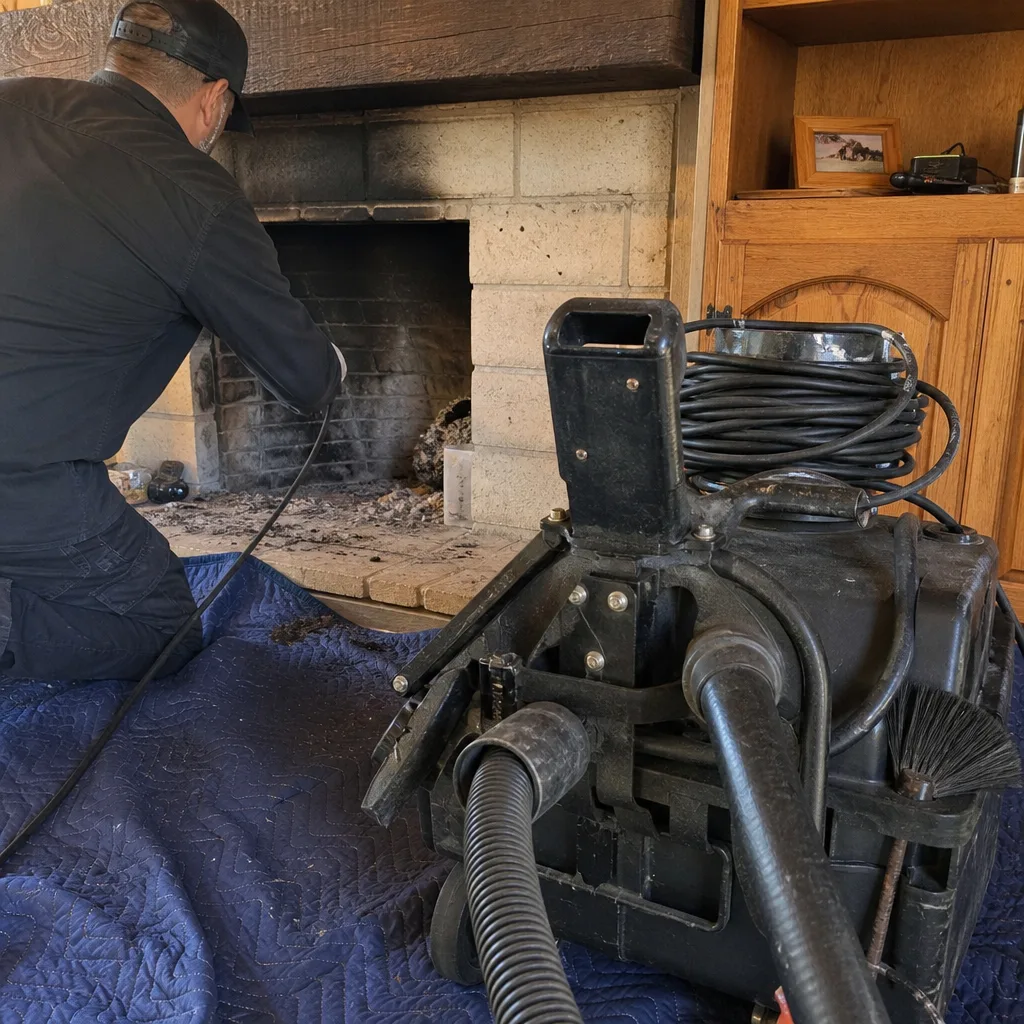 Before
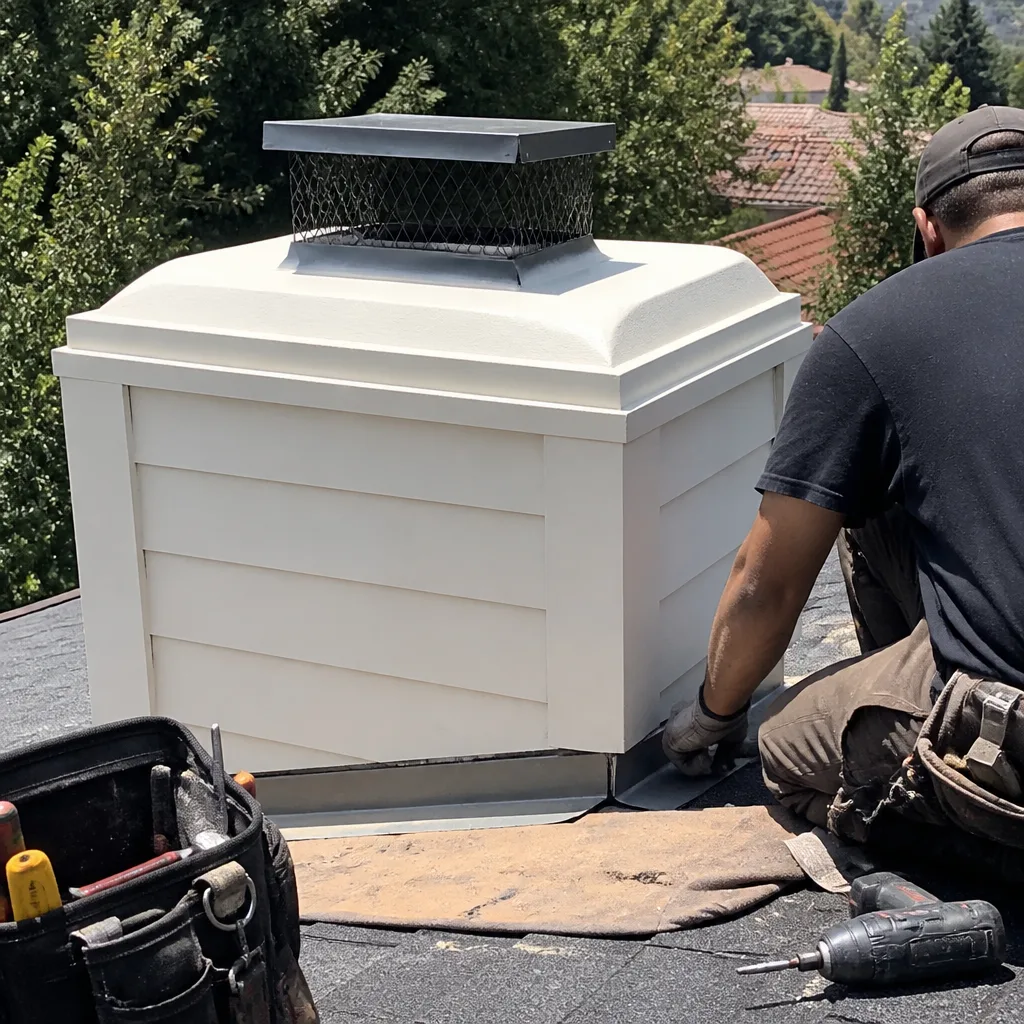 After
After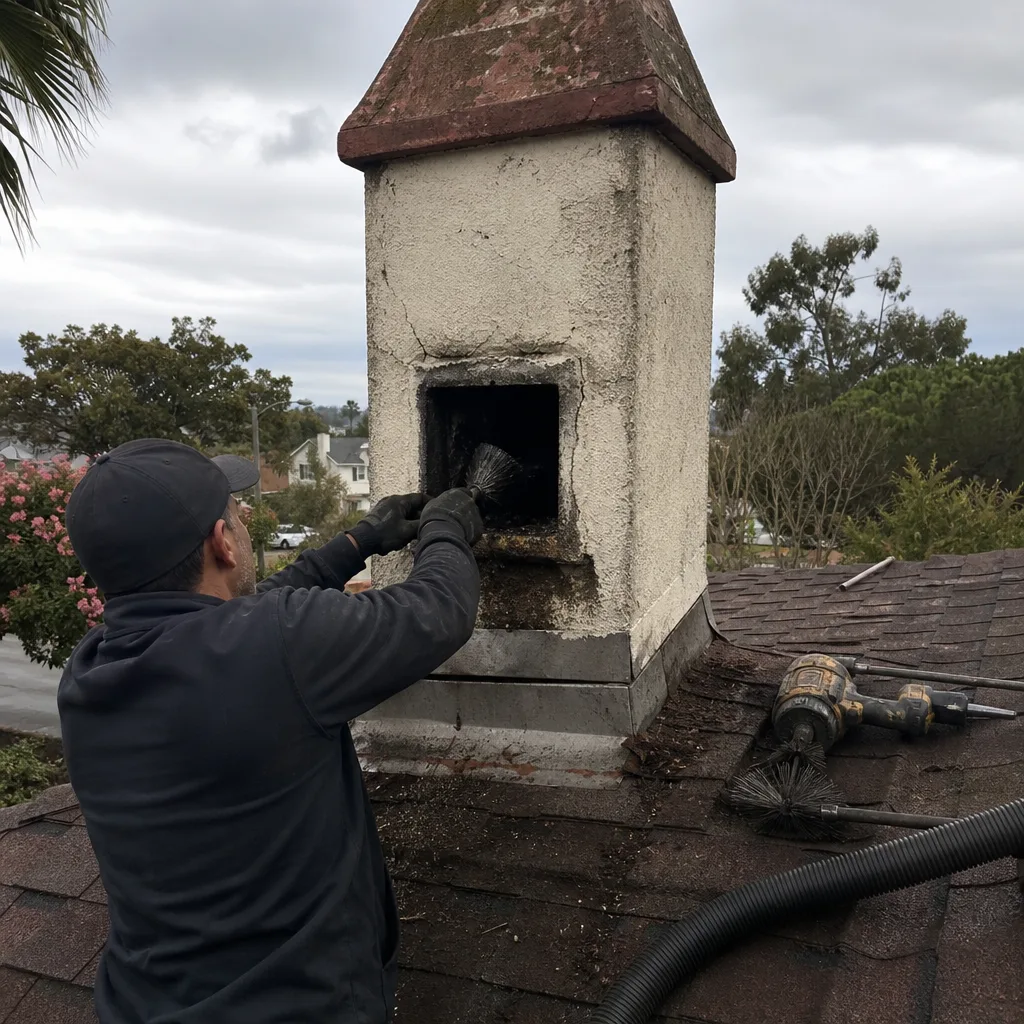 Before
 After
After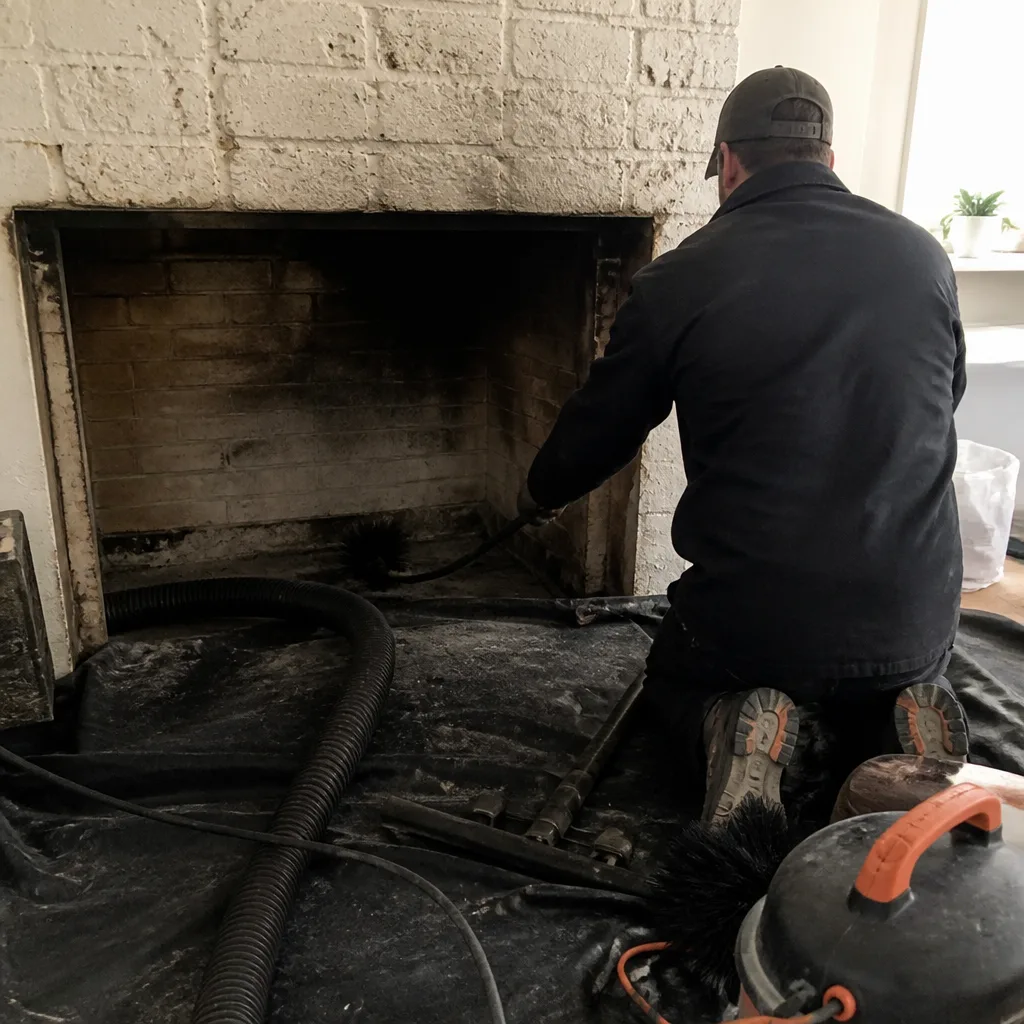 Before
 After
AfterWhen to Call a Professional
Call a chimney professional when you see visible creosote buildup (dark, flaky, or shiny residue on the flue or damper), when you smell a campfire-type odor from the fireplace during humid weather, when you see or hear animals in the chimney, when your smoke detector goes off during normal burns, or when smoke enters the room instead of going up the flue. Also call if you’ve just bought a home and have no records of when the chimney was last inspected. A chimney fire doesn’t announce itself politely, and carbon monoxide is invisible. If your fireplace has been acting differently, don’t wait until the burning season. Ashby Chimney San Diego offers free estimates throughout San Diego, including coastal and inland neighborhoods, and you can reach us at (619) 693-1499 anytime, day or night.
Frequently Asked Questions
A standard chimney sweep in San Diego costs between $189 and $340 for one wood-burning fireplace flue. That price should include the sweep, a Level 1 visual inspection, roof access, and a written report. Additional flues, inserts, and tall or steep roofs add to the price. For an exact quote, call (619) 693-1499; estimates are free.
Every 12 months if you burn 20 or more fires per year, and every 18 to 24 months for lighter use. San Diego’s coastal humidity keeps creosote stickier than it would be in a dry climate, so even low-use fireplaces need to stay on a schedule. Gas fireplaces can go 2 to 3 years between inspections.
Maybe, but you shouldn’t accept that recommendation without proof. A cracked or spalling flue liner is a genuine fire and carbon monoxide hazard, and liners in older San Diego homes are often original clay that’s now deteriorated. But a camera scan will show whether the damage is real and how extensive it is. At Ashby, we don’t recommend a liner replacement without showing you the camera footage. If it can be repaired with a product like HeatShield, we’ll tell you that instead. Call (619) 693-1499 if you’ve been told you need a liner and want a second look.
Creosote keeps building up. Over time it can ignite and cause a chimney fire, which can crack the flue liner and spread to the home’s structure. Even without a fire, a blocked or heavily coated flue can push carbon monoxide back into the living space. In a coastal San Diego home, moisture and salt make everything worse faster. The $250 sweep you skipped can become a $6,000 liner replacement, or worse.
You can buy a brush and rods at a hardware store, but you’ll miss what a professional sees: cracks in the liner, rusted dampers, failing crowns. See our DIY vs Professional Chimney Cleaning: The San Diego Homeowner’s Decision Guide for a fuller comparison. You’ll also make a mess that a HEPA vacuum would have prevented. More importantly, roof work is dangerous, and chimney work often involves climbing on steep or tiled roofs. If you choose to do it yourself, do it from inside with the damper sealed, wear a proper respirator, and still schedule a professional inspection at least every other year.
A sweep cleans the flue. An inspection evaluates the condition of the chimney system. A proper sweep should include a Level 1 inspection as part of the service, but a full inspection goes further: it checks the liner, damper, cap, crown, flashing, masonry, and clearances. If you’ve just bought a home or haven’t used the fireplace in years, get a full inspection before burning. For San Diego-specific details on inspection levels, review our Chimney Inspection in San Diego guide.
The Bottom Line
Chimney cleaning in San Diego is not a one-size-fits-all service. The climate, the firewood, the coastal air, and the age of the housing stock all shape what your chimney needs. A proper sweep costs $189 to $340, includes roof access and a written report, and gives you an honest picture of what’s happening inside your flue. If you’ve been putting it off because the fireplace barely gets used, that’s exactly the reason to book it. Infrequent use creates the stickiest, most corrosive conditions in a chimney. Ashby carries ash right in the name, fitting for the people whose job is to clean it out. The Ashby Chimney San Diego home covers our full range of services, from Fireplace Repair in San Diego to inspections and sweeps, and the number is (619) 693-1499, answered by a live person 24/7.
Written by Nathan Corliss, Owner at Ashby Chimney San Diego, serving San Diego since 2002.