
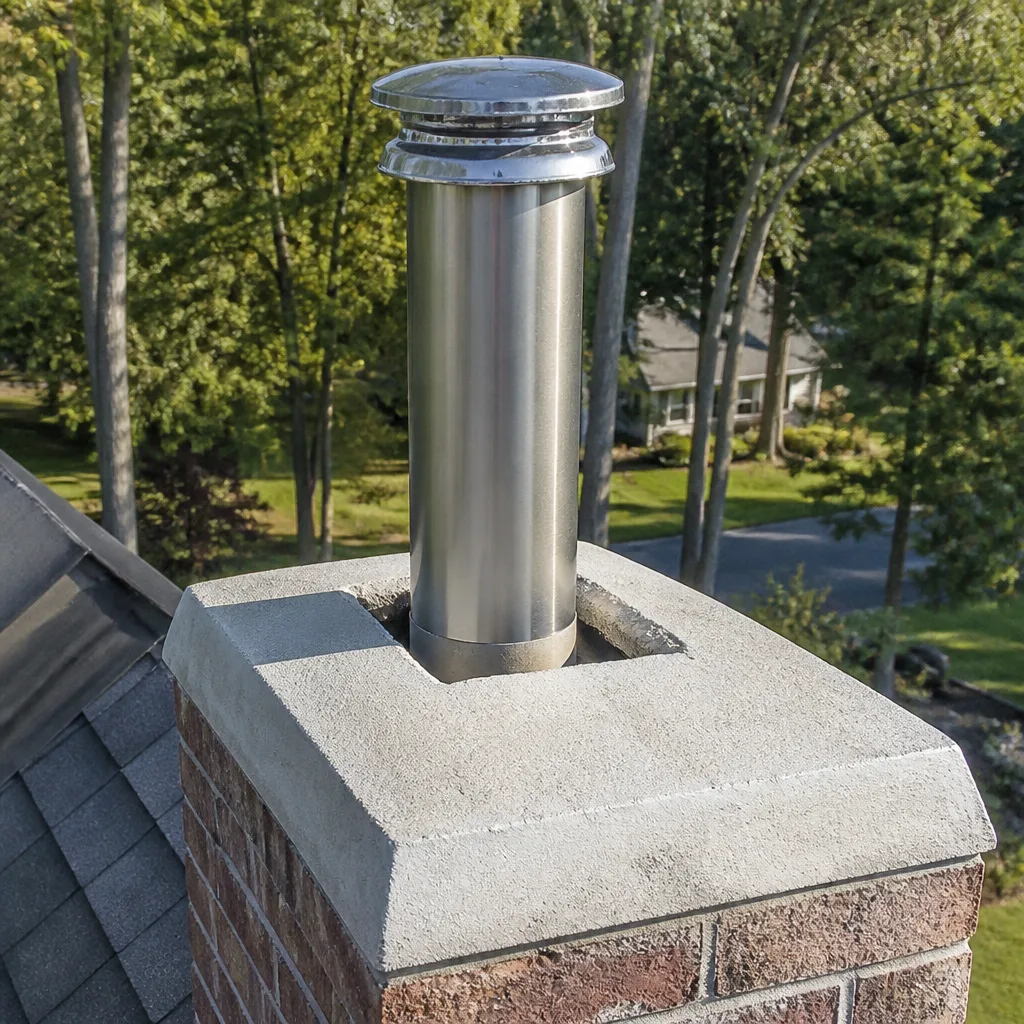
 Flue relining
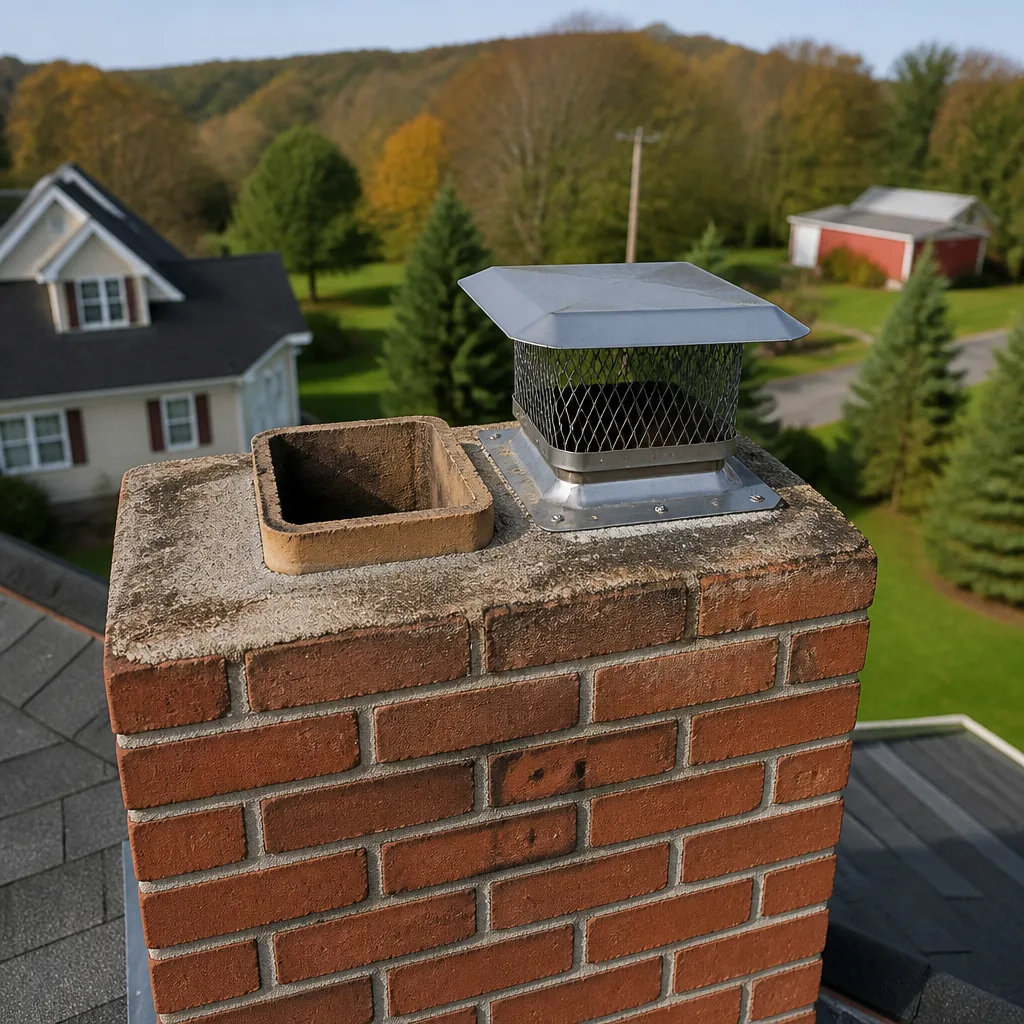 Sweep & inspection
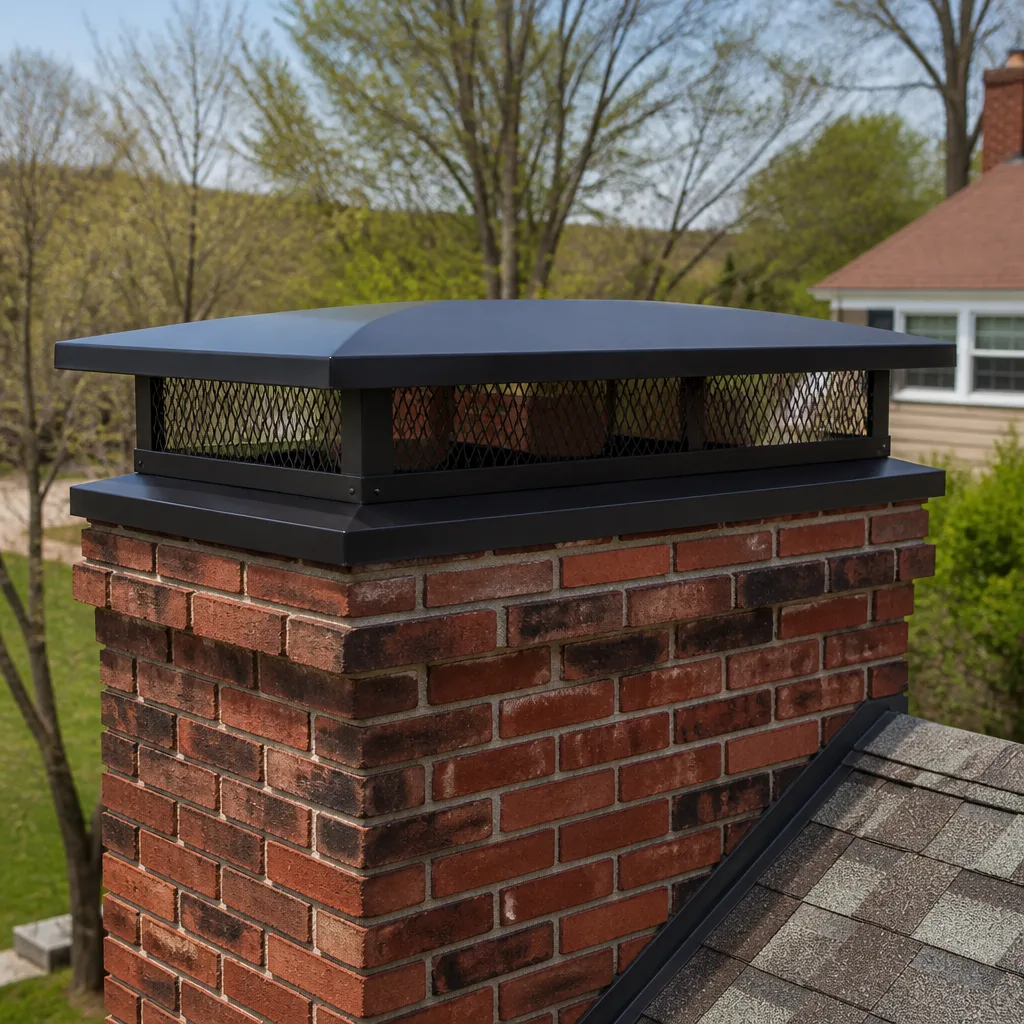 Caps & crowns
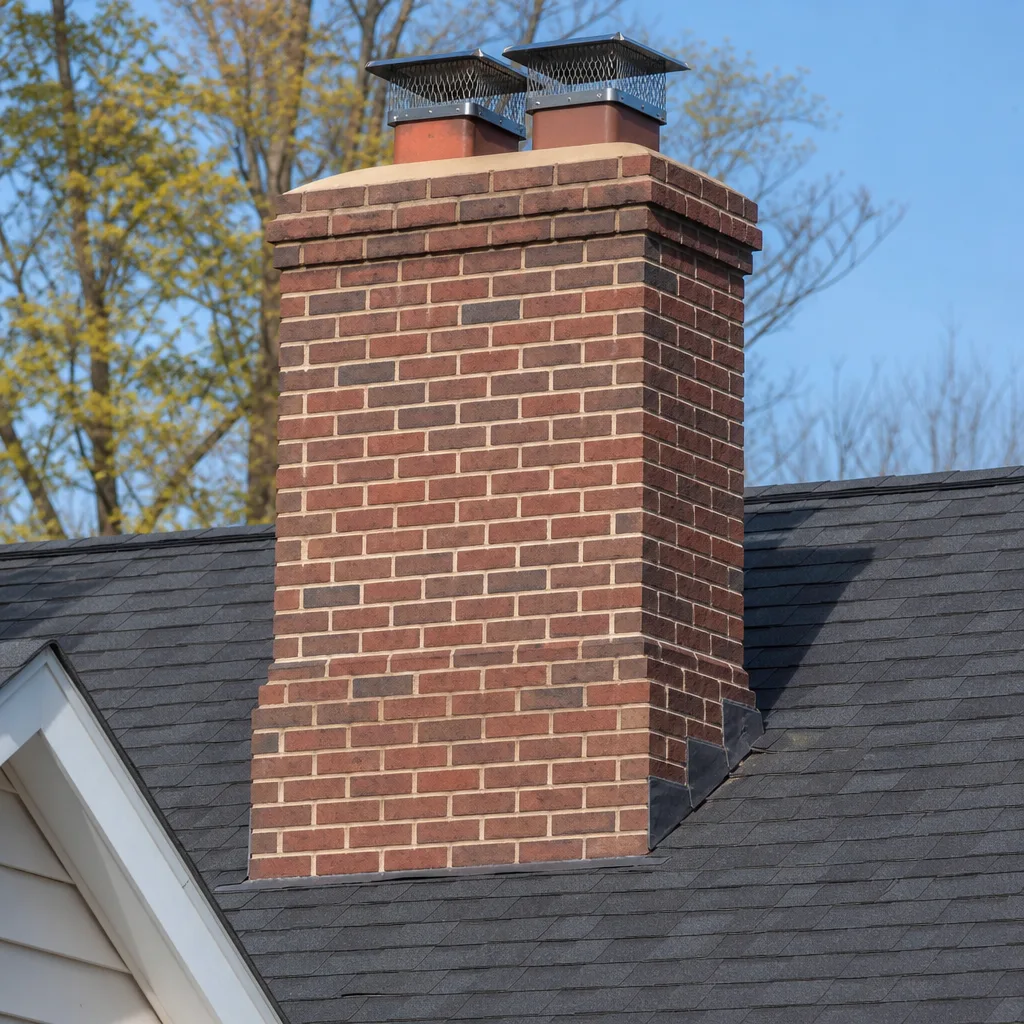 Masonry repair
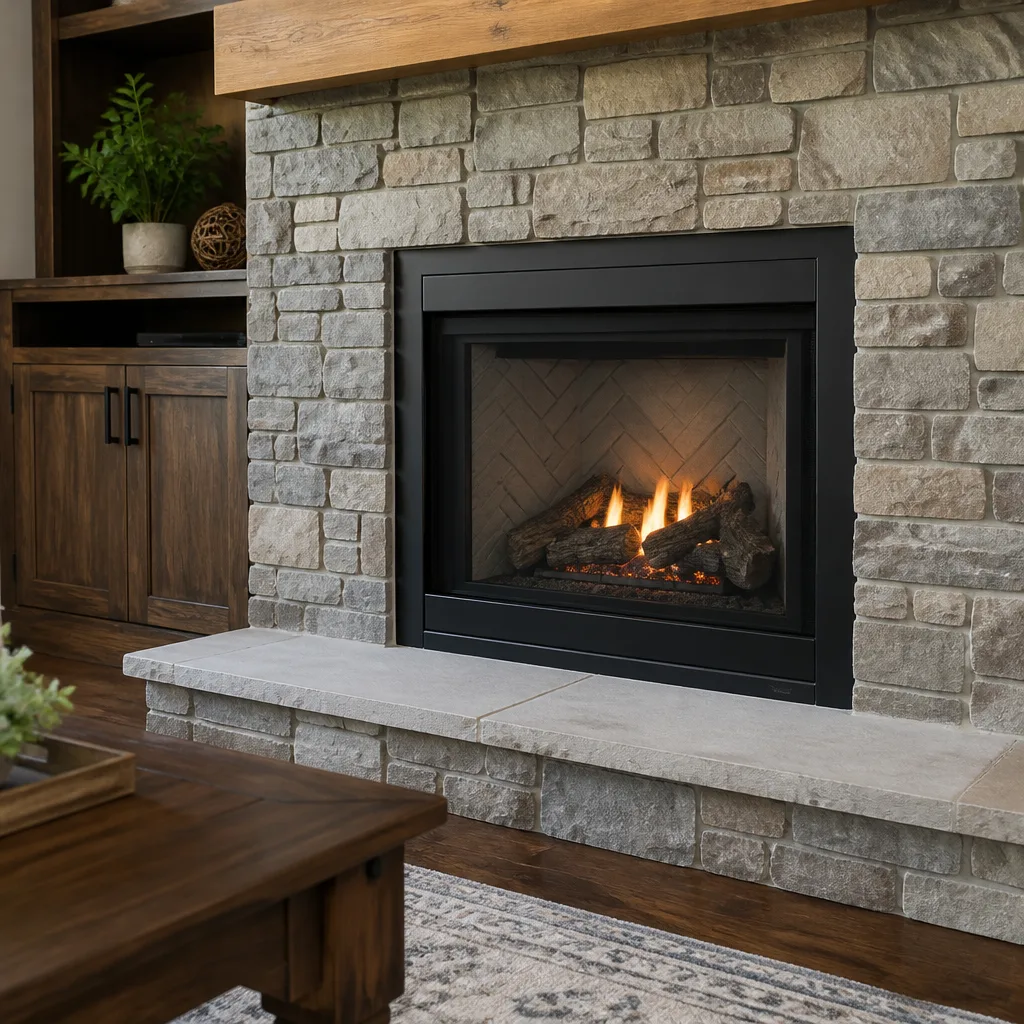 Gas fireplace service
Level 1 sweep and inspection to the NFPA 211 annual standard - flue, crown, cap, and flashing checked and photographed
Chimney sweep logs do not sweep chimneys. They loosen some creosote - which then falls where a brush and vacuum still have to collect it.
HeatShield Flue Liner Replacement: The San Diego Owner’s Guide
HeatShield flue liner replacement in San Diego typically runs between $1,800 and $3,400 installed, depending on the flue height, accessibility, and whether we’re relining a single-story fireplace or a two-story chase. Most HeatShield jobs are completed in one visit, and we stock HeatShield Cerfractory materials on our trucks so we’re not sending you back to a catalog. The way owners usually find out their HeatShield liner has failed is either a Level 2 camera inspection that turns up cracks or spalling, or a chimney sweep who pulls out chunks of what used to be a smooth ceramic surface.
HeatShield is a poured-in-place cerfractory liner system we’ve installed and repaired across San Diego for years. When it’s done right, it’s a solid product. When it fails, it usually fails in a specific way: cracking at the throat area, spalling near the top, or separation where the flue changes direction. That’s what this page is about.
Which HeatShield Models This Applies To
HeatShield isn’t sold in numbered model lines like a furnace. The system comes in two application types: HeatShield CeCure (for clay tile flues) and HeatShield HyCote (for stainless steel and other smooth-wall liners). The difference matters when we’re quoting a replacement, because CeCure is thicker and used to restore damaged clay tile, while HyCote is a thinner ceramic coating applied to metal. If you have the original paperwork, it’ll say which one was applied. If you don’t, we figure it out during the camera inspection by looking at the substrate underneath the cerfractory.
One gotcha we see in San Diego: older HeatShield installations from the 1990s and early 2000s sometimes weren’t mixed with the current ratio of refractory cement to insulation. Those early jobs can delaminate in sheets rather than crack gradually. We don’t need to match your old HeatShield “model” because the current HeatShield material is backward-compatible. What matters is the prep. A failed section has to be removed or stabilized before we recoat, and that prep work is where the skill lives. We’re an independent San Diego chimney company, not a HeatShield dealer or franchise. We install it because it works, not because a distributor told us to.
Styles & brands we work with
Signs Your HeatShield Flue Liner Replacement Is Failing
HeatShield failure is rarely visible from the fireplace opening. It shows up in these five ways:
- White or gray flakes falling into the firebox. This is spalled cerfractory material. It means the liner surface is breaking down, usually from moisture intrusion or a previous chimney fire that weakened the ceramic bond. We see this most often in San Diego coastal neighborhoods like Ocean Beach and Point Loma, where salt air accelerates moisture absorption in masonry chimneys.
- Draft problems that got worse over one season. A delaminating HeatShield liner can slump or buckle inward, narrowing the flue passage. If your fireplace used to draw fine and now back-puffs smoke, the liner may have shifted. We’ve had calls in Mission Hills where the liner looked intact from the top but had collapsed mid-flue.
- Higher than normal creosote accumulation in odd spots. HeatShield is supposed to create a smooth, insulated surface that resists creosote bonding. When the ceramic starts failing, creosote clings to the rough, exposed substrate. A sweep that comes back unusually dirty is a clue.
- Moisture staining on interior walls near the chimney. A cracked liner lets flue gases and condensation escape into the chimney structure. In San Diego’s rainy winters, that moisture shows up as staining or efflorescence on the chimney exterior or interior drywall.
- You can see cracks with a flashlight from the firebox looking up. This isn’t always possible, but when it is, a visible fissure in the ceramic means the liner has already lost its structural integrity. Don’t wait on this one.
See the difference
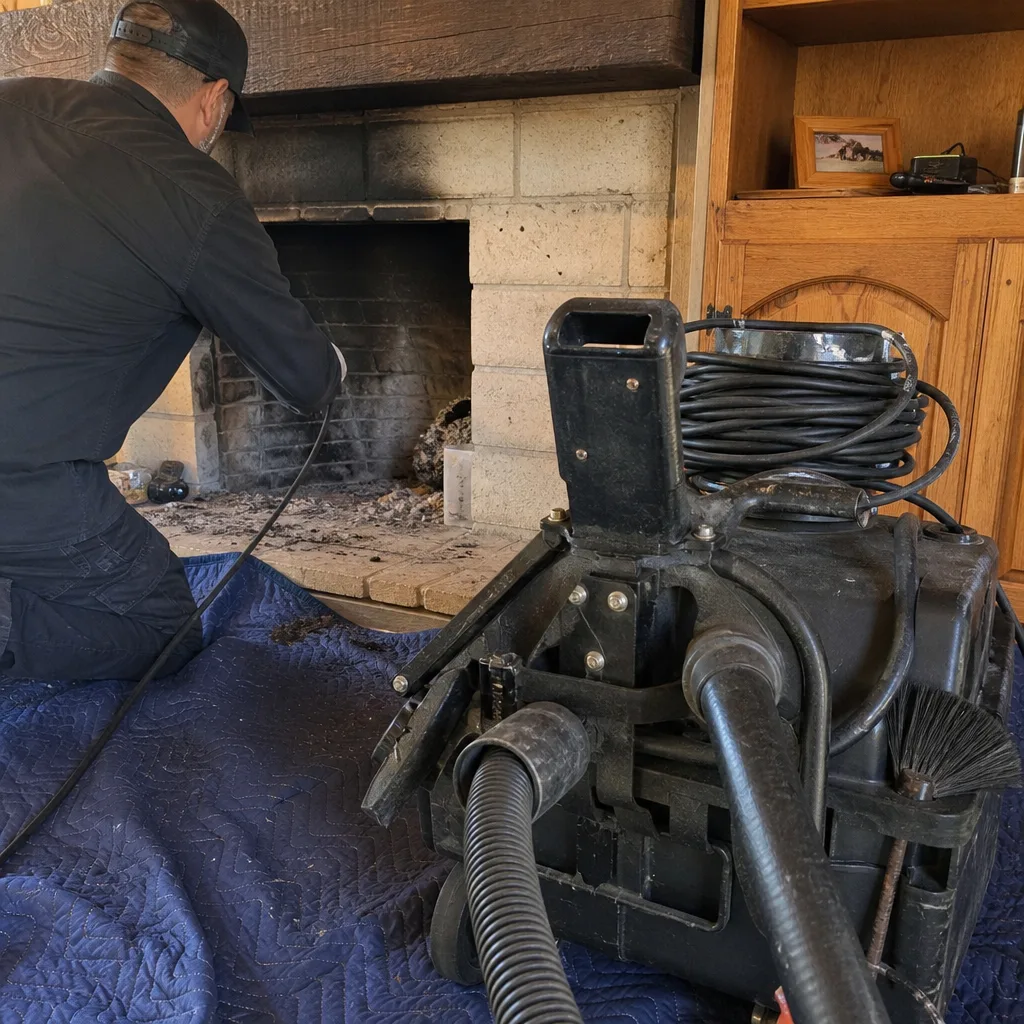 Before
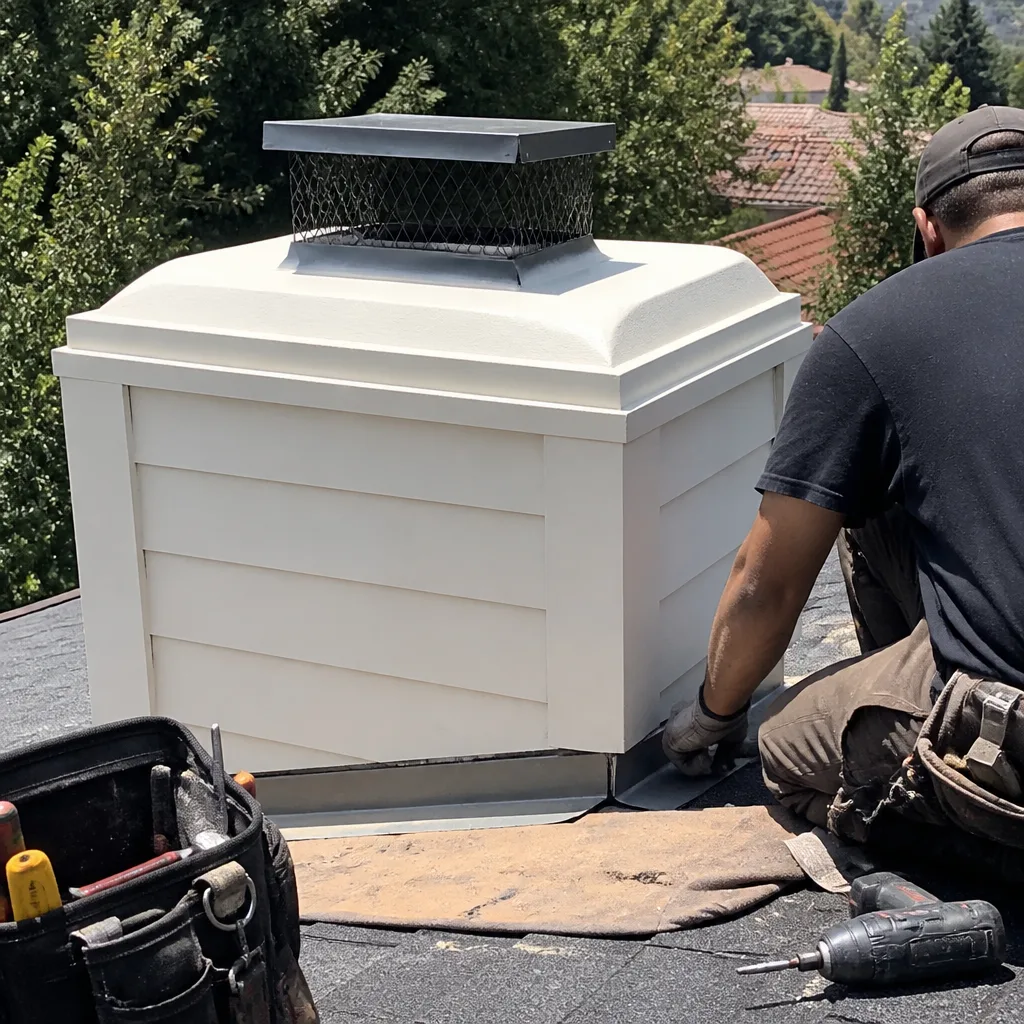 After
After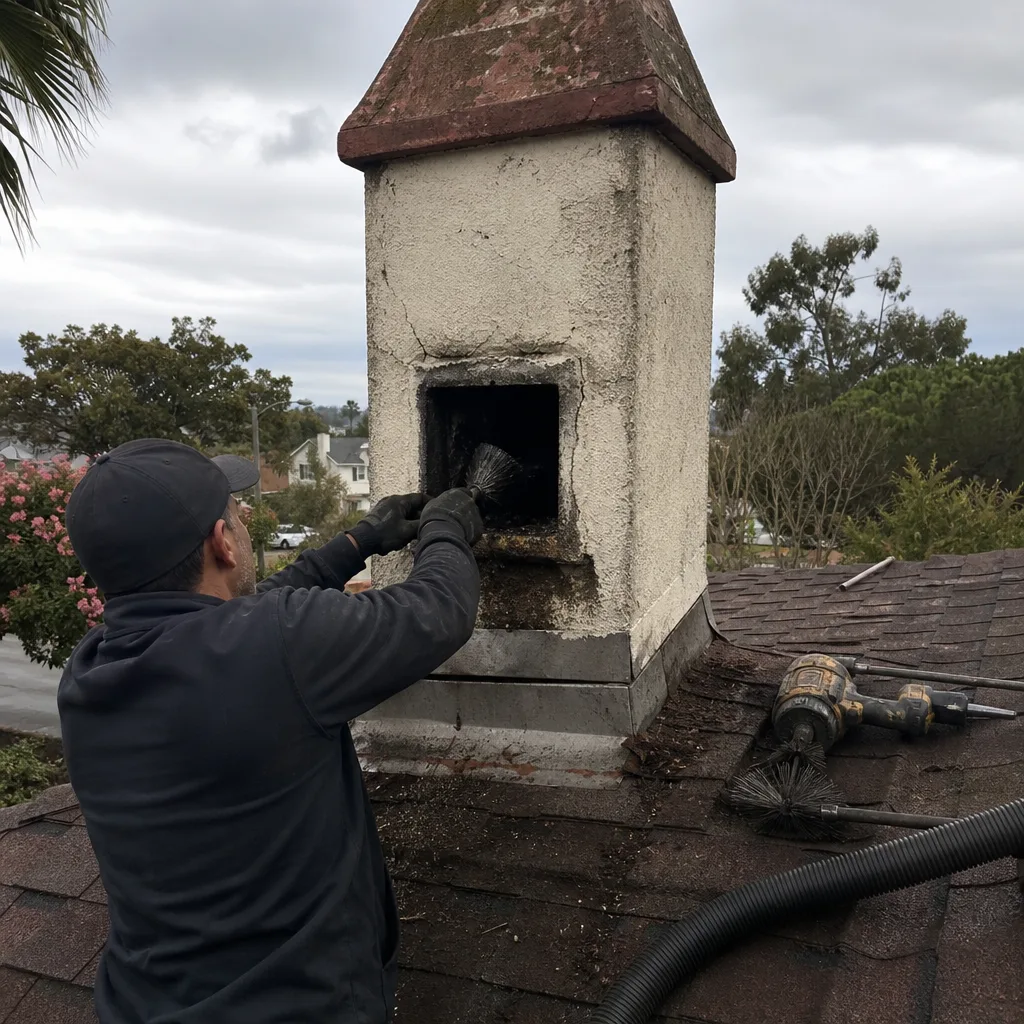 Before
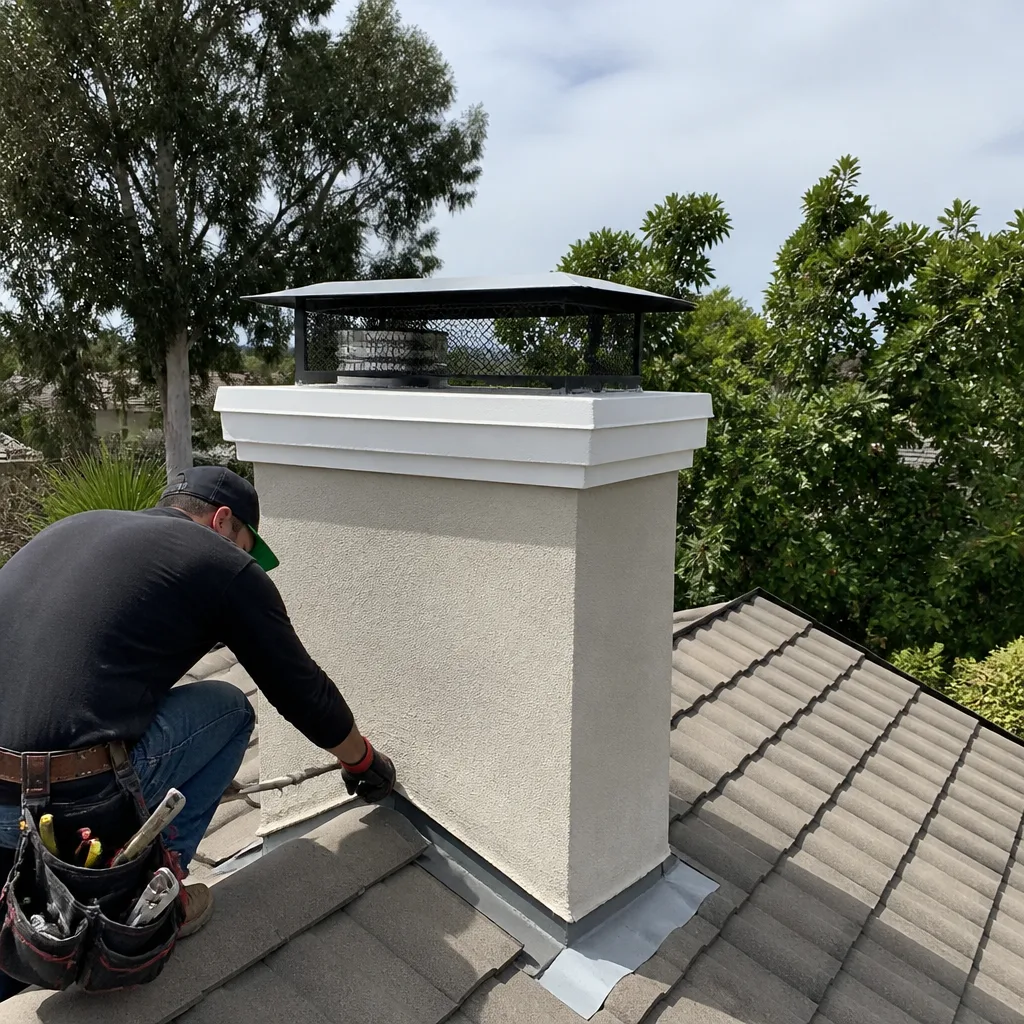 After
After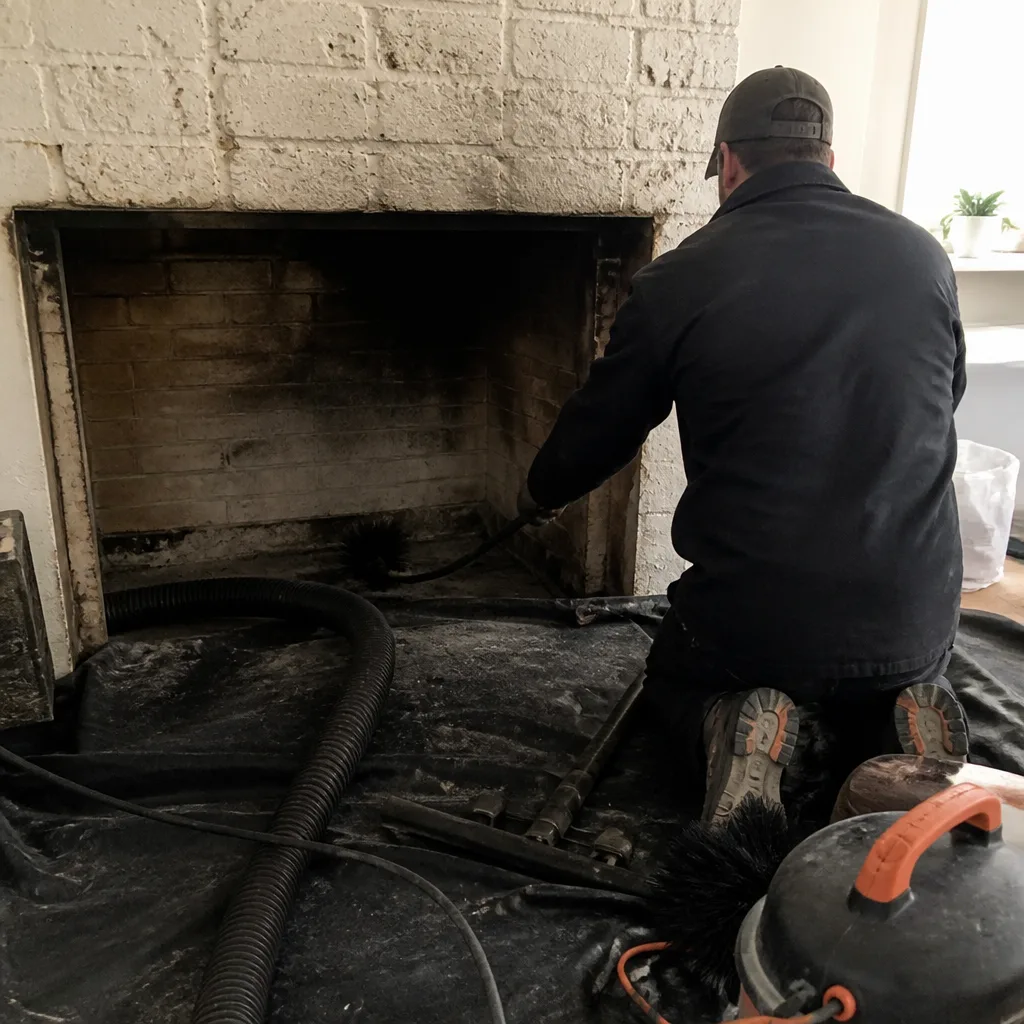 Before
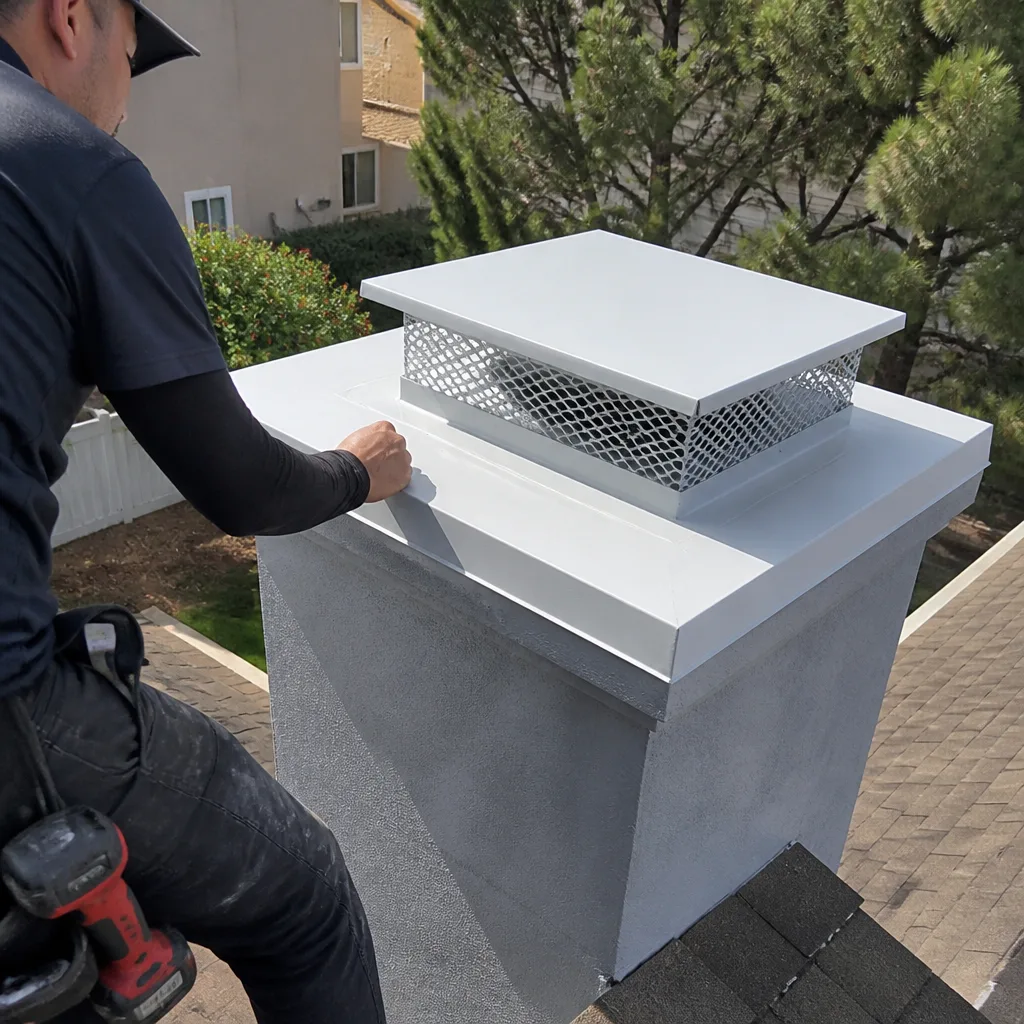 After
AfterReplacement Cost & What’s Included
For a single-story San Diego fireplace, HeatShield flue liner replacement generally runs $1,800 to $2,600. Two-story chimneys, chimneys with offset flues, or installations requiring scaffolding run $2,400 to $3,400. Here’s the breakdown for a typical one-story job:
- Level 2 camera inspection and written report: $195 (credited toward the repair if you proceed)
- Flue prep and cleaning: $250 to $450, depending on creosote load and how much failed material has to be removed
- HeatShield application labor and materials: $1,200 to $1,900, keyed to flue size and height
- Final verification camera scan: included with every HeatShield job we do
You get a written price before any work starts. The number we quote at the door is the number on the invoice. The repair itself is covered by our Kingswell Guarantee: if the HeatShield application fails within the guarantee period, we return and correct it at no charge, including a free second visit inside that window. We’ve been operating since 2002, and Nathan Corliss still personally reviews camera footage from every HeatShield job before we call it done.
DIY or Call Us?
You can safely check a few things yourself: inspect the firebox for flakes, run a flashlight up the flue to look for visible cracking, and note whether the fireplace is smoking more than it used to. Write down what you see. That helps us quote accurately over the phone.
What you shouldn’t try is patching the liner yourself. HeatShield is not a caulk or a paint. The cerfractory material has to be mixed at a specific ratio, applied at the correct thickness, and cured under controlled conditions. A bad patch can slough off inside the flue and create a blockage, which is a carbon monoxide risk you won’t see until it’s serious. It also voids any warranty and makes the eventual professional repair more expensive because we have to remove whatever was applied. If you’re in San Diego and you suspect your liner is failing, call (619) 693-1499 and we’ll get a camera in there before you spend a dime on materials you shouldn’t be working with anyway.
FAQs
A properly installed HeatShield liner lasts 20 to 25 years in most San Diego homes, though coastal properties in La Jolla or Coronado may see 15 to 20 because salt air and humidity work on the outer masonry and eventually the liner. We can give you a more specific number after a camera inspection shows the current condition. Call (619) 693-1499 for an exact quote, and we’ll tell you honestly how many years are left in your liner before we recommend doing anything.
Sometimes, in limited situations. If the failure is localized to a single cracked section and the rest of the liner is bonded and sound, we can do a targeted HeatShield repair rather than a full relining. That runs less than half the cost of a full replacement. But we only recommend it when the camera footage supports it, because patching over a widespread failure means you’ll pay twice. Nathan’s rule is simple: if the camera shows more than 30% of the liner is compromised, replace it. Call (619) 693-1499 and we’ll show you the footage before asking you to decide.
Most San Diego HeatShield replacement jobs are scheduled within three to five business days, and the work itself takes one day for a single-story fireplace. We’re not an emergency chimney service, and we won’t pretend to be. But a cracked liner is a “don’t use the fireplace until we look at it” situation, not necessarily a “demolish the chimney tomorrow” situation. If you’re in San Diego and looking at flakes in the firebox, call (619) 693-1499 and we’ll get you on the schedule and walk you through what’s safe in the meantime.
Yes. Our trucks carry HeatShield Cerfractory in the standard mix ratios we use most often in San Diego, along with prep tools and camera gear. We also keep materials from DuraFlex and Gelco on hand for stainless steel and cast-in-place alternatives, so if the inspection shows your chimney would be better served by a different system, we can talk through the trade-offs on the spot without a second appointment.
If you have a HeatShield liner that’s showing signs of failure, or you just want a straight answer about what’s going on inside your flue, call Ashby Chimney San Diego at (619) 693-1499. We’ll give you a written price before we start, show you the camera footage so you know exactly what we’re seeing, and put the guarantee in writing before we leave. Say the price first, explain the work, put the promise in writing. That’s how we do it in San Diego.
Written by Nathan Corliss, Owner, Ashby Chimney San Diego at Ashby Chimney San Diego, serving San Diego and nearby areas.